Authentic antique cobalt glass is identified by its deep, rich blue color, created by adding cobalt oxide to molten glass. High-value pieces typically feature pontil marks on the base (indicating hand-blown origins), lack mold seams, and may carry signatures from makers like Tiffany, Steuben, or Fenton. Pieces from the 18th and early 19th centuries command the highest prices due to rarity and craftsmanship.
Imagine you are at a dusty estate sale in rural Pennsylvania. The morning sun cuts through the barn rafters, illuminating a shelf of dusty glassware. Amidst the clear jars and chipped plates, a flash of electric blue catches your eye. It feels heavy in your hand, the color so deep it’s almost hypnotic. Is this a mass-produced vase from the 1980s worth $5, or a rare piece of early American blown glass worth a mortgage payment? This specific shade of blue has captivated collectors for centuries, but distinguishing the treasures from the trinkets requires a trained eye.
What Makes Cobalt Glass So Valuable?
Not all blue glass is created equal. The value of cobalt glass is driven primarily by age, provenance, and maker. While “depression glass” in cobalt blue is collectible, it rarely reaches the astronomical prices of earlier, hand-blown examples.
True antique cobalt glass—specifically pieces from the Stiegel or Sandwich glass era (late 1700s to mid-1800s)—was a luxury item. The cobalt oxide used to achieve that signature hue was an expensive import. Consequently, finding a large, intact vessel from this period is rare.
A photo comparing a mass-produced modern cobalt vase with visible mold seams next to an antique hand-blown cobalt pitcher with a rough pontil mark on the bottom
Pro Tips for Value:
Weight: Older lead glass feels heavier than modern soda-lime glass.
Wear: Look for “shelf wear” (scratches on the bottom) which confirms age.
Clarity: Early glass often has small bubbles or “seeds,” which are not considered flaws but signs of hand-production.
How Can I Tell if My Cobalt Glass is Antique?
The most reliable way to date blown glass is to examine the base. Before the mid-19th century, glassblowers used a pontil rod to hold the hot glass. When they snapped it off, it left a rough scar or a polished depression known as a pontil mark.
If you run your finger along the bottom and feel a sharp ridge or a smooth, polished dimple, you likely have a hand-blown piece. Conversely, if the piece has smooth, raised lines running up the sides, it is likely pressed glass made in a mold, common in the 20th century.
Identifying these marks manually can take hours and requires a library of reference books. Using the Antique Identifier app, you can simply take a photo and get an instant result, helping you spot the difference between a reproduction and a true antique in seconds.
Who Are the Most Sought-After Makers?
When conducting an appraisal, I always look for specific makers who mastered the cobalt medium.
Tiffany Studios: Their “Favrile” glass often incorporated cobalt. A signed Tiffany piece can easily fetch five figures.
Steuben: Frederick Carder’s “Aurene” blue is legendary.
Boston & Sandwich Glass Company: Famous for their mid-1800s pressed and blown wares.
Fenton: A prolific maker, but their early, unmarked pieces are often confused with lesser brands.
Close-up macro shot of an etched ‘L.C. Tiffany Favrile’ signature on the underside of a blue glass bowl
Authentication often comes down to the specific shade. Steuben cobalt is incredibly deep, almost black in low light, while depression glass cobalt tends to be lighter and more transparent.
This attention to color nuance is similar to identifying other colored glasswares, which we cover in our guide on Identifying Antique Carnival Glass Patterns.
What Are the Major Red Flags for Fakes?
The market is flooded with reproductions. In the 1970s and 80s, companies like Hazel Atlas and Mosser produced millions of cobalt pieces. While vintage and collectible, they do not hold the high fair market value of true antiques.
Warning Signs:
Oily Sheen: Some modern glass has an iridescent spray applied to mimic carnival glass. If it flakes off, it’s a cheap modern fake.
Excessive Perfection: Antique glass has character—tool marks, asymmetry, and flow lines. Perfectly uniform glass is usually a modern machine-made product.
“Made in China” Stickers: A surprising number of “antique” finds still have residue from a modern import sticker on the base.
Side-by-side comparison of a ‘Depression style’ cobalt butter dish (reproduction) versus an authentic 1930s piece, highlighting the difference in mold detail sharpness
How Do Condition and Restoration Affect Price?
For a serious collector market, condition is king. A “mint” condition sugar shaker might sell for $400, while the same piece with a chip on the rim might struggle to get $40.
Restoration is a tricky subject. While a professional conservation effort can stabilize a piece, visible repairs generally lower the auction estimate. However, for extremely rare 18th-century Stiegel type flasks, collectors are often willing to overlook minor damage simply because so few examples exist.
Always check the “high points” of the design on pressed glass for wear. If the pattern is worn smooth, the value drops significantly compared to a piece with crisp details.
A professional appraiser holding a UV blacklight over a piece of cobalt glass to check for hidden glue repairs or cracks
Valuing cobalt glass is a journey through history, chemistry, and art. Whether you are looking at a replacement value for insurance or hunting for a bargain at a thrift store, remember to look for the pontil mark, feel the weight, and check the clarity. That flash of blue on a bottom shelf might just be a forgotten masterpiece waiting for you to discover it. Happy hunting!
European antique pottery marks are the primary tool for identification, typically located on the base of the piece. These hallmarks often include the maker’s initials (like the “AR” for Augustus Rex), a specific symbol (such as Meissen’s crossed swords), or a country of origin stamp (required after 1891). Authentic marks are usually impressed, painted, or printed under the glaze.
*
Imagine you are at a dusty estate sale in upstate New York. You pick up a delicate, painted vase that feels heavier than it looks. You turn it over, hoping to find a signature, but all you see is a faint blue squiggle and some numbers. Is it a priceless piece of Meissen porcelain from Germany, or a cheap 20th-century reproduction?
That single mark is the key to unlocking its provenance and value. Without knowing how to read it, you might walk away from a fortune—or overpay for a fake.
How do I find and read a pottery mark?
The first step in any appraisal is locating the evidence. On most European pottery, the mark is on the underside of the base. However, don’t stop there.
Sometimes, marks are hidden in the design itself, on the lower rim, or even on the lid of a tureen.
A close-up photo of a ceramic vase being turned over to reveal a clear maker’s mark on the unglazed foot rim
When you find a mark, look for three things:
The Maker’s Mark: A symbol, logo, or name (e.g., the Wedgwood anchor or the Sevres interlaced L’s).
The Quality Mark: Numbers or letters indicating the clay batch or painter.
The Country of Origin: If you see “Made in France,” the piece was likely made after 1891 to comply with the US McKinley Tariff Act.
If the mark is blurred or sits on top of the glaze rather than under it, proceed with caution. This can sometimes indicate a later addition or a forgery.
What are the most famous European marks to look for?
Europe has produced earthenware, stoneware, faience, and porcelain for centuries. Each region had its titans.
In England, Staffordshire was the hub. Look for the impressed names of makers like Wedgwood, Minton, or Spode. A diamond-shaped registration mark indicates a piece registered with the British Patent Office between 1842 and 1883—a dead giveaway for dating.
A graphic chart showing the evolution of the Meissen crossed swords mark from the early 1700s to the modern era
In Germany, the Meissen crossed swords are the holy grail of porcelain. However, this is also one of the most forged marks in history. A true expert looks at the precision of the swords and the quality of the “paste” (the clay body itself).
Identifying these marks manually can take hours of flipping through reference books. Using the Antique Identifier app, you can simply take a photo and get an instant result. It cross-references thousands of maker’s marks in seconds.
How can I tell if a hallmark is fake?
Forgery detection is a critical skill. As values rose, so did the number of fakes.
One common trick is the “apocryphal mark.” This happens when a 19th-century factory, like Samson in Paris, legally copied the styles and marks of 18th-century masters like Chelsea or Meissen.
Check the application. Original marks on majolica or faience were often hand-painted by the artist. If the mark looks like a perfect, pixelated digital stamp, it’s a modern reproduction.
Side-by-side comparison of a genuine hand-painted 18th-century mark versus a crisp, modern transfer-printed fake mark
Also, feel the weight. Hard-paste porcelain (typical of German and some French factories) is cool to the touch and dense. Soft-paste porcelain (early English and French) feels softer and warmer. If the mark says “Meissen” but the material feels like heavy, porous stoneware, it’s a fake.
Does the condition of the mark affect value?
Absolutely. A condition report isn’t just about chips and cracks in the body; it’s about the clarity of the mark too.
A “scratched through” mark is a major clue. factories like Meissen would scratch a line through their logo on “seconds”—items that were sold at a discount due to flaws. These pieces have a significantly lower fair market value than first-quality items.
Photo showing a pottery mark with a distinct scratch or score line through it, indicating a factory second
If a mark has been ground off or altered, that is a red flag for restoration or an attempt to deceive. Always check the mark area under a UV light to see if it has been tampered with.
Ultimately, attribution—confirming who made it—is just one part of the puzzle. The collector market dictates the price. A piece with a rare mark, excellent conservation, and strong provenance (history of ownership) will always command a high auction estimate.
Whether you are digging through a thrift store bin or bidding at a high-end auction house, knowing your hallmarks is your best defense against bad buys. Keep your eyes sharp and your phone ready.
A real Murano glass label is either a Vetro Artistico® Murano consortium sticker, with a borsella logo and a three-digit furnace code, or a foil label from a named furnace such as Venini or Seguso. Stickers reading “Murano Style”, “Venetian Style”, or “Cristal Venezia” mean the piece was made somewhere else. Without any label, the base, the weight, and the sharpness of the color layers decide.
*
Imagine you are at a crowded estate sale in Florida or an antique mall in Ohio. You spot a vibrant, swirling glass vase on a dusty shelf. The seller claims it’s vintage Murano, and there’s a shiny sticker on the side that says “Murano Style.”
Your heart jumps, but your appraiser’s instinct hesitates. Is that sticker a guarantee of Venetian artistry, or a clever trap for the uninformed?
Before you pay a premium for what might be a modern knock-off, let’s look at the crucial details that separate true Italian mastery from clever imitations.
Close-up photo of a genuine “Vetro Artistico® Murano” label with the QR code and tamper-proof holographic edge, placed next to a generic gold foil “Made in Italy” sticker for comparison.
Why is identifying real Murano glass so difficult?
The challenge lies in the island’s history. Murano isn’t a single brand; it is an island near Venice, Italy, home to hundreds of independent glass furnaces. For centuries, makers like Barovier & Toso, Seguso, and Venini have operated independently.
Unlike Wedgewood or Hummel, which have standardized marks, Murano glass identification relies heavily on attribution—linking a piece to a specific furnace based on technique, color application, and yes, stickers. However, labels fall off, get faked, or use misleading language.
Without a signed base or a verifiable provenance (history of ownership), you are often left judging the glass itself.
The gap between the name and any legal protection is the root of the problem. Glassmaking was confined to the island by a Venetian decree of 1291, but the word “Murano” itself was not protected until the regional trademark of 1994, and the first labels under it appeared in 2002. Imitations from Asia and Eastern Europe are estimated to hold 40 to 45 percent of the market, so for any piece made before 2002, which is most of the vintage glass in circulation, attribution rather than a mark does the work.
What do authentic Murano labels actually look like?
Not all stickers are created equal. In the US market, you will commonly encounter three types of labels. Knowing the difference affects the fair market value significantly.
The Consortium Label: The most trustworthy modern mark is from the Promovetro Consortium. It features a specific logo (a glassmaker tool called a borsella*), the words “Vetro Artistico® Murano,” and a serial number. This guarantees authentication.
Furnace Specific Labels: Older vintage pieces (1950s-1970s) might have foil stickers from specific houses like Salviati or Fratelli Toso. These are goldmines for collectors.
The “Murano Style” Trap: If a sticker says “Murano Style” or “Cristal Venezia,” put it back. These are almost always mass-produced elsewhere.
Identifying these marks manually can take hours, especially if the text is faded. Using the Antique Identifier app, you can simply take a photo and get an instant result. It compares your label against a database of known authentic marks and common forgeries.
What does the Vetro Artistico Murano label look like?
The Vetro Artistico® Murano label is a small white or transparent sticker printed with a borsella (the glassmaker’s tongs) logo, the words “Vetro Artistico® Murano”, and a three-digit number that identifies the furnace that made the piece. It is the only Murano label backed by law: the Veneto Region created the trademark in 1994 and the Promovetro consortium has applied it to glass since 2002. Every other sticker on a Murano piece is a maker’s own label, a shop label, or an importer’s label.
Feature
What to look for
Since
Logo
Borsella (tongs) symbol; printed in red or blue depending on the type of production
2002
Wording
“Vetro Artistico® Murano” with the registered mark; never “style”, “type”, or “inspired by”
2002
Furnace code
Three digits starting at 001; the same number appears on every piece from that furnace
2002
Background
Opaque white or fully transparent; two formats, a rectangle and a small jewelry version
2002
Segmented cuts
The label is scored into segments that break apart when peeled, so it cannot be moved to another piece
2002
QR / Data Matrix code
Scans to a protected database record for that piece; verify at muranoglass.com or with the consortium’s Original Murano Glass app
2016
Security print
A film that shifts from clear to cyan as you tilt it, UV-fluorescent red and blue ink, and gold cold foil
2016
Three checks take under a minute. Tilt the label under a lamp and watch for the color shift. Read the three-digit code and compare it with the consortium’s published list of licensed furnaces. Scan the code if the label has one; the same UV torch used to spot uranium glass also lights up the fluorescent ink on a post-2016 label. A sticker that is glossy and smooth, carries no number, or peels off in one piece fails the test.
The label has an older sibling. Vetri Murano labels with a “VM” logo and codes 001 to 056 were issued by the Consorzio Venezia Vetro from 1981 until about 2001, so a VM sticker on a 1980s or 1990s piece is genuine; it simply predates the current mark. Roughly 50 furnaces were using the Vetro Artistico trademark by 2012, and the code list has since grown past 130. Absence of the label therefore condemns nothing: many furnaces never joined, and every piece made before 2002 predates the scheme. The history of Murano glass explains why a legal mark arrived so late for an industry that is more than seven centuries old, and the contrast with French houses is sharp: Baccarat, Lalique, and Daum have marked the glass itself for most of the last century, while Murano relied on paper.
Which Murano labels are real and which are a warning sign?
A label proves Murano origin only when it names the consortium or a specific furnace. A label that names a country, a style, or a shop proves nothing either way, and a label that says “style” proves the opposite.
Label wording
Who issued it
Era
What it proves
“Vetro Artistico® Murano” with a three-digit code
Promovetro consortium under Veneto regional law
2002 to now
Made on Murano by a licensed furnace; the strongest label
The scale of the problem explains why the wording matters. Imitation pieces from Asia and Eastern Europe are estimated to take 40 to 45 percent of the market for Murano glass, and most of them reach buyers with some form of Murano wording on a sticker. The most commonly faked antiques follow the same pattern: the fake borrows the name of the place rather than the name of a maker.
Foil labels are the most abused category. Reproductions of vintage furnace foils are sold by the sheet, so a foil label counts as evidence only when its typography, color, and outline match documented examples of that furnace, and when its condition matches the piece. A crisp, bright foil on a base with decades of shelf wear is a mismatch, and so is a 1950s label on a shape that furnace did not make until the 1970s. American makers went through the same transition: Fenton relied on paper labels until it began molding its logo into the glass in 1970, which is why so much early Fenton is unmarked. The broader guide to art glass marks covers which makers marked the glass itself and which never did.
How can I tell if glass is Murano without a sticker?
When the sticker is long gone—a common issue with estate sale finds—you must look at the glass itself.
First, check the base. Authentic blown glass from Murano is hand-finished. You should often see a pontil mark. This is a rough scar or a polished-smooth depression on the bottom where the glass was broken off the pontil rod.
Macro shot of the base of a glass vase showing a polished pontil mark—a smooth, shallow depression in the center of the base—versus a completely flat, molded base.
Mass-produced glass usually has a smooth, flat bottom or, worse, a faint molded ridge line running down the side. Authentic Murano will rarely have visible mold seams unless it is specific pressed glass (which is rarer for high-end Murano).
Does the presence of bubbles mean it’s fake?
This is a huge misconception. While high-end crystal (lead glass) strives for perfection, Murano glass is an artistic, handmade medium.
Small, scattered bubbles are actually a sign of the handmade process. However, the bubbles should be internal. If the surface feels gritty or pitted, that is a sign of poor quality control or damage, which hurts the condition report.
Conversely, if the glass is absolutely flawless, perfectly symmetrical, and feels suspiciously light, be wary. Chinese reproductions are often chemically perfect but lack the “soul” and weight of Italian glass.
Side-by-side comparison of a heavy, sommerso technique Murano vase with rich submerged colors versus a thin, uniform colored glass vase.
One of the most valuable styles found in the US collector market is “Sommerso” (submerged). This involves dipping colored glass into molten glass of a different color to create layers.
Authentic Sommerso, popularized by Flavio Poli for Seguso, features distinct, sharp lines between the colors. You should see a clear definition where the red meets the blue, for example.
In fakes, the colors often bleed together or look muddy. If the transition is blurry, it’s likely a cheaper imitation, which significantly lowers the auction estimate.
Photo of a facet-cut Sommerso block vase, clearly showing three distinct layers of color (red, yellow, clear) with sharp, clean boundaries.
Sommerso as a named technique dates from the late 1930s, so a piece offered as “1920s sommerso” is misdated at best. The heaviest examples are the faceted block vases of the 1950s and 1960s, often in red or cobalt under a thick clear casing; a cobalt piece in a single layer of the same size weighs noticeably less in the hand, which is why weight is the first check when the layers are hard to read in poor light.
Is a signature required for high value?
Surprisingly, no. Many masterpieces were never signed. In fact, a signature can sometimes be a red flag.
Forgers often etch “Murano” or “Venice” onto the bottom of generic glass using a diamond tip tool. If the signature looks like it was hastily scratched with a rotary tool, be skeptical.
Genuine signatures (like Archimede Seguso) are usually fluid and confident. Sometimes, the signature is actually an acid stamp.
If you find a high-quality piece without a signature, don’t dismiss it. Look for gold flecks (aventurine) or complex cane work (millefiori). These require high technical skill that counterfeiters rarely bother to replicate perfectly.
Detailed shot of “aventurine” glass showing shimmering copper/gold flakes suspended inside the glass matrix, typical of high-end Murano work.
How did Venini, Seguso, and Barovier & Toso sign their glass?
Most Murano furnaces did not sign their glass before the 1960s, and the ones that did used a small set of methods: an acid-etched stamp, a diamond-point engraving on the base, or an enamel-painted signature on studio pieces. Knowing which method a furnace used in which decade is the fastest way to catch a signature that was added later.
Furnace or maestro
Typical marking
Period
What a fake usually gets wrong
Venini
Acid stamp “venini murano” in the 1930s; three-line acid stamp “venini / murano / ITALIA” from the 1940s to the 1960s; diamond-point “venini italia” from the mid-1960s; “venini” with a year after 1985
1930s to now
Engraved signatures on pieces that should carry an acid stamp, or a year on a pre-1985 shape
Seguso Vetri d’Arte
Paper labels; the glass itself is usually unsigned
1930s to 1970s
A scratched “Seguso” on the base of a piece the furnace never signed
Foil labels; engraved “barovier & toso murano” on some later production
1930s to now
Engraving on early pieces that only ever had labels
Cenedese, Barbini, Salviati
Diamond-point signatures naming the furnace, sometimes with the artist and a date on later work
1950s onward
Signature naming only “Murano” or “Italy” without a furnace
Modern studio maestri
Engraved name, year, and often a sequence number
1980s onward
Missing year on a piece that should carry one
The pattern in the last column is the useful one. A genuine signature names a furnace or a person; a forged signature names the island. “Murano”, “Made in Murano”, or “Murano Italy” scratched into the base with no maker’s name is the mark most often added to generic glass, because it is the only word the forger is sure the buyer will recognize. The founder’s own story shows how late signatures arrived: Paolo Venini built the firm from 1921, yet the systematic dated signature only appeared after the company changed hands in 1985.
Technique is the second signature. Millefiori canes, murrine, aventurine flecks, and controlled sommerso layers are difficult and slow, so a piece that shows them has cleared a bar most imitations never reach, signed or not. Pressed and molded glass carries the opposite kind of mark, a logo or letter in the mold, which is how Heisey’s Diamond H and the makers of carnival glass are identified; a Murano piece with a molded mark of that kind is almost never Murano.
Authenticating Murano glass is an art form. It requires assessing the weight, the clarity of the color, the cold-work on the base, and the quality of the label. Whether you are buying for restoration, resale, or your own collection, trust your hands and your eyes.
Real Murano glass commands respect—and a high replacement value—because it represents centuries of guarded secrets and fiery craftsmanship. Don’t let a shiny “Style” sticker fool you.
To distinguish between 19th-century Satsuma and Imari vases, examine the clay and color palette. Satsuma ware uses a cream-colored earthenware body with a distinctive crackle glaze and detailed gold/polychrome enamel scenes. Imari porcelain is hard, white, and translucent, dominated by deep underglaze blues, rusty iron reds, and gold gilding without crackling.
*
Imagine you are at a dusty estate sale in Ohio, sifting through a crowded china cabinet. You spot a vase that looks old—really old. It’s covered in intricate warriors and gold leaf, but is it a museum-quality Japanese treasure or a mass-produced export piece from the 1920s?
Identifying 19th-century Japanese ceramics can feel like decoding a secret language. But once you know the grammar of clay and color, you can spot the difference between a high-value Meiji period masterpiece and a common reproduction from across the room.
Close-up side-by-side comparison showing the crackled cream glaze of a Satsuma vase versus the smooth white porcelain surface of an Imari vase
What are the key characteristics of Antique Satsuma Ware?
True Satsuma ware, specifically from the late Edo and Meiji periods (1868–1912), is defined by its material. It is earthenware, not porcelain. This means if you tap it, it produces a dull thud rather than a clear ring.
The most critical identification feature is the craquelure or crackle glaze. This web of fine lines in the clear glaze is intentional and covers the cream or ivory-colored body.
Look for the Shimazu crest—a red cross in a circle—often found on the base or near the rim. However, be cautious; this mark was widely used on 20th-century tourist ware too. High-quality 19th-century pieces feature incredibly precise, miniature painting known as gosu blue or heavy gold gilding (moriage) that feels raised to the touch.
Identifying these marks manually can take hours. Using the Antique Identifier app, you can simply take a photo and get an instant result.
How do I distinguish Imari Porcelain from other styles?
Imari (or Arita ware) is distinctly different because it is true porcelain. The clay body is kaolin-rich, firing to a hard, white, glass-like finish.
The classic “Imari palette” is unmistakable: dominated by deep cobalt blue (painted under the glaze) and iron red (painted over the glaze), accented with gold. This style was heavily exported to Europe and the US, influencing makers like Royal Crown Derby.
Check the underside. The base of an Imari vase will be bright white and smooth, often with blue underglaze markings or simply concentric blue rings. The provenance of these pieces often traces back to wealthy Western families who collected them during the “Japonisme” craze of the late 1800s.
Photo of the base of an Imari vase showing concentric blue rings and a mark, contrasted with the clay base of a Satsuma piece
What determines the Fair Market Value of these vases?
Condition is everything in the collector market. A condition report for a Satsuma vase should note any staining in the crackle glaze, which can lower value. For Imari, look for rubbing on the gold gilding—a sign of heavy handling that impacts fair market value.
Attribution matters immensely. A signed piece by a master studio like Kinkozan or Yabu Meizan can command auction estimates in the thousands, whereas unmarked “export” wares might fetch $50–$150.
High-resolution detail shot of a signed Kinkozan studio mark on a vase base, showing the square seal and gold lettering
Be wary of “Nippon” marks. If a vase is marked “Nippon” (Japan), it typically dates from 1891 to 1921, created specifically for export to comply with US tariff laws. While collectible, these are generally less valuable than earlier, unmarked examples or artist-signed studio works.
How can I spot a fake or modern reproduction?
Forgery detection in Japanese ceramics often comes down to the quality of the art.
On genuine 19th-century pieces, the faces of figures are painted with single-hair brushes—expressive and distinct. On modern reproductions, faces often look blank, cartoonish, or are simple red dots.
Feel the decoration. The “moriage” (raised gold) on antique Satsuma should feel like distinct ridges. On cheaper copies, it feels flat or looks like piped icing that hasn’t adhered well.
Macro photography showing the fine, hand-painted facial expressions on a genuine antique figure versus the blurry or simple features on a reproduction
Also, inspect the wear. A 150-year-old vase should show shelf wear on the bottom rim—a soft, matte friction ring where it sat on a table. A glossy, pristine bottom rim suggests it was made yesterday. This principle of wear analysis is vital for authentication, a skill we discuss further in our guide on Detecting Reproductions: How to Tell New Wood from 100-Year-Old Patina.
Whether you prefer the earthy, intricate warmth of Satsuma or the bold, regal contrast of Imari, knowing the difference puts you ahead of 90% of casual shoppers. Always check the clay body first: cream and crackled for Satsuma, white and smooth for Imari.
Remember, if you’re ever unsure in the heat of an auction, the Antique Identifier app is your pocket appraiser, ready to help you separate the treasures from the trinkets.
Depression glass identification relies on recognizing specific patterns, colors, and mold marks produced between 1929 and 1939. Authentic pieces often have minor flaws like straw marks or bubbles, which reproductions lack. To determine value, look for rare colors in patterns like Royal Lace (cobalt blue) or Cameo (green), checking for sharp mold lines and consistent coloring.
Imagine you are at a dusty estate sale in Ohio, digging through a cardboard box marked “$5 each.” You pull out a pink plate with a distinct floral design. It feels slightly greasy—a hallmark of genuine age—and catches the light beautifully. Is this a common thrift store find, or have you just discovered a piece of American Sweetheart worth hundreds? Knowing the difference is what separates casual collectors from savvy pickers.
What is Depression Glass and Why Does It Matter?
Depression glass was mass-produced glassware distributed free or at low cost during the Great Depression. It was often given away in oatmeal boxes or at movie theaters.
Because it was made cheaply, imperfections were common. However, today, condition is everything. A condition report on a high-value piece should note any chips (“fleabites”) on the rim or cracks.
Identifying the specific manufacturer—like Hocking Glass Company, Federal Glass, or Jeannette Glass—is key to accurate attribution.
Close-up photo of a pink Depression glass plate showing typical mold seams and a small air bubble or ‘straw mark’ in the glass
How Can I Tell if My Glass is Real or a Reproduction?
This is the most common question I get at my appraisal desk. The market is flooded with reproductions, especially in popular patterns like Cherry Blossom.
Genuine Depression glass often has “straw marks” (thin lines that look like scratches but are from the mold) and air bubbles. Reproductions often look too perfect or feel too heavy.
Identifying these marks manually can take hours. Using the Antique Identifier app, you can simply take a photo and get an instant result.
Real pieces also show wear consistent with age on the base. If the bottom is pristine after 90 years, proceed with caution. Forgery detection often comes down to the weight and the feel of the pattern’s relief.
Which 5 Patterns Are Worth the Most Money in 2026?
While many patterns are common, these five consistently command high prices at auction houses.
1. Royal Lace (Hazel Atlas)
This is the holy grail for many. The cobalt blue color is incredibly rare and sought after. A full dinner service can reach a significant auction estimate.
Look for: A square-ish design with three floral clusters.
Pro Tip: Be careful of “Hazel Atlas” reproductions; the originals have sharper mold details.
2. Cameo (Hocking Glass)
Also known as “Ballerina” or “Dancing Girl,” this pattern features a figure in a cameo.
Key Value: The green color is iconic, but yellow can also be valuable.
Red Flag: Watch for the “rope” edge. If the rope detail is muddy or indistinct, it might be a repro.
Photo of a green Cameo pattern plate, clearly showing the ‘Dancing Girl’ silhouette in the center
3. American Sweetheart (MacBeth-Evans)
This pattern is known for its distinct, translucent Monax (white) and Cremax (cream) colors, though pink and red are the big winners.
Design: Intricate scrolls and medallions.
Market Insight: The fair market value for red pieces is significantly higher than the translucent white versions.
This delicate opacity is quite different from the clarity of cut glass, which relies on geometric incisions for brilliance.
4. Mayfair (Hocking Glass)
Often called “Open Rose,” this pattern features square shapes and a prominent rose design.
Top Pick: The “cookie jar” in pink or green is a major find.
Warning: This pattern has been heavily reproduced. Authentic cookie jars should have the pattern on the bottom; some fakes do not.
Photo of a pink Mayfair ‘Open Rose’ cookie jar with its lid, sitting on a wooden table
5. Cherry Blossom (Jeannette Glass)
This is perhaps the most famous pattern, featuring cherries and leaves.
Rarity: The “Delphite” (opaque blue) color is extremely rare.
Authentication: Real plates have a smooth center; many reproductions have faint, messy veins in the leaves that shouldn’t be there.
How Do I Determine the Value of My Find?
Value depends heavily on rarity (color and piece type) and condition. A pitcher is almost always worth more than a saucer.
To get a true replacement value for insurance, check sold listings on eBay, not just asking prices. Dealers at an antique dealer shop or show will usually price items at retail, which is higher than what you might get selling it yourself.
If you find a piece with damage, restoration or conservation is rarely worth the cost for Depression glass unless it is an exceedingly rare item.
Photo showing a comparison of two blue glass pitchers, one Cobalt Blue (Royal Lace) and one lighter blue, highlighting color differences
Where Can I Find Valuable Depression Glass?
The thrill is in the hunt. Estate sales in the Midwest are goldmines.
Thrift stores can be hit or miss, but items are often misidentified. Look for that tell-tale greasy feel and soft colors.
Online collector markets are great for specific pieces, but beware of shipping costs for fragile items. Always ask for a detailed description of chips or cracks before buying.
Building a collection takes patience. Don’t be afraid to carry a pocket light to check for cracks. Learning to distinguish pressed glass techniques from blown variants will serve you well. Happy hunting!
Royal Doulton identification relies heavily on analyzing the backstamp. The famous “Lion over Crown” mark appears after 1902. For accurate dating between 1928 and 1954, look for a small number near the crown and add it to the year 1927. Earlier Doulton Lambeth wares often use impressed artist initials for attribution.
Imagine you are at a crowded estate sale in rural Pennsylvania. You spot a glazed jug on a dusty shelf in the basement. It feels heavy, the glaze is rich, and you suspect it might be something special.
Is it a valuable 19th-century antique or a mass-produced reproduction from the 1980s? Without knowing how to decode the markings on the bottom, you might walk away from a piece worth hundreds of dollars.
How do I identify early Doulton Lambeth marks?
Before the company received the “Royal” warrant, they were simply known as Doulton. If you find heavy, salt-glazed stoneware, you are likely looking at early pieces produced at the Lambeth factory between 1815 and 1956.
These items rarely have the printed lion stamp. Instead, look for an impressed oval mark that reads “DOULTON LAMBETH.”
Pro Tips for Early Wares:
Check for Artist Initials:Doulton Lambeth wares often feature incised initials on the base (like George Tinworth or Hannah Barlow). This attribution significantly increases the auction estimate.
Look for “England”: If the word “ENGLAND” appears under the mark, the piece was made after 1891 to comply with US tariff laws.
Material Matters: Early production focused on industrial ceramics, faience, and majolica before moving into fine bone china.
Close-up photo of an impressed “DOULTON LAMBETH” oval mark on the bottom of a brown salt-glazed stoneware jug, showing incised artist initials nearby.
What does the standard Royal Doulton lion mark mean?
The most recognizable symbol in pottery identification is the lion standing on a crown. King Edward VII granted the Royal Warrant in 1901, and the company adopted this logo in 1902.
If you see this mark without a crown, it is likely a later generic crest or a specific variation, but the standard authentication standard involves both the lion and crown.
Identifying these marks manually can take hours. Using the Antique Identifier app, you can simply take a photo and get an instant result.
How do I calculate the exact year using the number system?
This is the “secret code” that many pickers miss. Between 1928 and 1954, Royal Doulton added a small number to the right of the crown backstamp.
To find the production year, you simply add that number to the year 1927.
Examples:
A “1” means 1928 (1927 + 1).
A “10” means 1937 (1927 + 10).
A “20” means 1947 (1927 + 20).
This rule applies to many character jugs, Toby jugs, and figurines from the mid-20th century. If you don’t see a number, you have to rely on the style of the text or the registration number (RdNo).
Macro shot of a green Royal Doulton backstamp on a white plate, highlighting a small number “14” located to the right of the crown logo.
Where are the date letters located on older pieces?
For pieces produced between 1872 and 1954 (specifically on earthenware and stoneware), there is often an impressed letter code. This is distinct from the printed backstamp.
You need to look for a small impressed letter code on the bottom. For example, the letter “A” indicates distinct years based on the cycle.
However, interpreting these requires a reference chart, as “A” could mean 1882 depending on the accompanying logo. This is similar to the complexity involved when we discuss Decoding Meissen Porcelain Marks, where subtle variations change the entire timeline.
Diagram or photo showing the bottom of a ceramic vase, pointing out the difference between the printed ink logo and the impressed letter code stamped into the clay.
How can I spot a fake or damaged piece?
Forgery detection is critical in the antique market. While Royal Doulton is faked less often than Meissen, reproductions do exist.
More commonly, you need to watch out for professional restoration. A restored piece has significantly lower replacement value than one in original condition.
Red Flags:
Poor Definition: Authentic figurines have crisp toes, fingers, and facial features. Since slip casting molds degrade over time, a blurry or undefined face suggests a late run or a copy.
Yellowing: Over time, old repairs and glues turn yellow. Use a UV blacklight to check the condition report of the head and hands.
Modern Barcodes: If you see a barcode sticker or a gold “Made in Indonesia” sticker, the piece is modern (post-2000s) and generally holds less value than UK-made pieces.
Side-by-side comparison of a “Real” vs “Fake” Royal Doulton figurine, zooming in on the crisp detail of the fingers on the real one versus the blurry “blob” fingers on the fake.
What determines the value of my Royal Doulton?
Just because it’s old doesn’t mean it’s retirement money. The fair market value depends on three things: provenance, rarity, and condition.
Standard dinner services often have low resale value today. However, rare Doulton Lambeth art pottery, prototype character jugs that were never mass-produced, or specific color variations of standard figures command high prices.
Before paying for an expensive appraisal, check the base for drill holes. A hole drilled through the mark usually indicates the item was sold as a “second” (factory reject) or was converted into a lamp, which destroys its collector value.
Conservation of these pieces is vital; never wash antique pottery in a dishwasher, as the heat can craze the glaze and ruin the value.
Mastering Royal Doulton identification takes practice. By looking for the artist initials on early stoneware and doing the math on the mid-century date codes, you can confidently separate common thrift store finds from true investment pieces. Happy hunting.
Authentic Meissen porcelain is identified by the cobalt blue crossed swords mark applied underglaze, a standard used since 1722. Look for the specific curvature of the hilts and pommels, which evolved from the straight lines of the Augustus Rex period to the curved swords of the Marcolini period. Genuine hard-paste porcelain will be cool to the touch, translucent against light, and feature crisp detailing without the blurry definition often found in soft-paste imitations.
Imagine you are at a dusty estate sale in Connecticut. You reach into a cabinet and pull out a heavy, ornate plate. You flip it over and see two blue crossed lines. Is this an 18th-century treasure worth thousands, or a 19th-century “Dresden” decorator piece worth fifty bucks?
For a picker or collector, that split-second decision is the difference between a massive ROI and a sunk cost. Let’s look at how to tell the difference.
Why is Meissen porcelain so valuable to collectors?
Meissen was the first European manufactory to crack the code of true hard-paste porcelain in 1710, a secret previously held only by the Chinese. Before this, Europeans were struggling with soft-paste mixtures that lacked durability.
Because of its history and the immense skill required to produce it, early Meissen commands high auction estimates. However, value depends heavily on provenance (the history of ownership) and precise attribution to the correct period.
Close-up photo comparing the texture of true hard-paste Meissen porcelain (glossy, pure white) versus a duller, creamier soft-paste imitation
How can I identify the real Meissen crossed swords mark?
The crossed swords are one of the oldest trademarks in existence, but they haven’t stayed the same.
In the very early years (approx. 1720-1723), you might see the “KPM” mark, but the swords became standard shortly after. The blue paint must be underglaze—meaning if you run your finger over the mark, it should feel smooth and seamless with the rest of the bottom, not raised or painted on top of the glaze.
Pro Tip: Real Meissen marks are hand-painted. If the mark looks too perfect, stamped, or symmetrical, it is likely a transfer print and a fake.
Identifying these marks manually can take hours. Using the Antique Identifier app, you can simply take a photo and get an instant result.
What do the different variations of the mark mean?
To nail down the fair market value, you need to date the mark. Here is a quick cheat sheet for the major eras:
Augustus Rex (AR) Monogram (1710–1730): Extremely rare. Often faked.
Dot Period (1763–1774): A small dot placed between the sword handles.
Marcolini Period (1774–1814): A star or asterisk placed below the crossed swords.
Understanding these subtle differences is crucial for authentication. A “Marcolini” plate is valued differently than a modern 20th-century piece.
A visual timeline graphic showing the evolution of the Meissen crossed swords mark from 1722 to the present day, highlighting the Dot and Marcolini star
How can I spot a fake or “Dresden” imitation?
This is where 90% of novices get burned. Dresden is a city, not a specific factory. Many studios in the city of Dresden produced porcelain in the “Meissen style” and used marks that looked confusingly similar to the crossed swords.
Red Flags for Forgery Detection:
Gold over the blue: If the mark is golden or painted over the glaze, it’s a decoration, not a factory mark.
“Dresden” wording: If the word “Dresden” appears in a script, it is not antique Meissen.
Weight: True hard-paste Meissen is dense and heavy. Fakes often feel lighter, like bone china.
Side-by-side comparison of a genuine blue underglaze Meissen mark versus a blurry, overglaze stamp found on a reproduction
What do “scratch marks” through the logo mean?
If you find a genuine crossed swords mark but see one, two, or three lines scratched through the glaze across the swords, this is a condition report from the factory itself.
These are “cancellation marks” (Schleifstriche). They indicate the piece was a “second” or “third” quality—usually due to firing flaws or painting errors.
While these are authentic, their replacement value is significantly lower than first-quality pieces. Dealers often hide these scratches with stickers, so always run your fingernail over the mark.
How does condition affect the appraisal?
Even a verified 18th-century piece can lose 50% of its value if it has poor restoration.
Use a blacklight to check for conservation efforts. New paint will fluoresce differently than the original glaze. Professional appraisal is recommended for high-value items, but knowing how to spot glued repairs or re-painted chips yourself will save you money at the auction house.
Photo of a Meissen figurine under UV blacklight, revealing a glowing purple area where a professional restoration was performed on a broken arm
The world of Meissen is complex, but the hunt is worth it. Remember: look for the blue underglaze, check for the cancellation scratches, and never assume a piece is genuine just because it has crossed lines. Happy hunting!
Authentic antique writing desks can be identified by hand-cut dovetail joints (uneven sizing, typically pre-1890), the presence of straight saw marks on secondary woods like pine, and genuine oxidation on hardware. High-value examples often feature hidden compartments located behind central prospect doors or removable pigeonhole valances.
Imagine you are at a crowded estate sale in rural Pennsylvania. You spot a slant-front desk covered in dust in the corner of the study. It looks old, but is it a treasure worth thousands or a clever reproduction?
I’ve seen hundreds of these pieces in my 20 years as an appraiser. Knowing where to look—and where to push—can mean the difference between walking away from a masterpiece or spotting a forgery.
How can I tell if my antique desk is authentic?
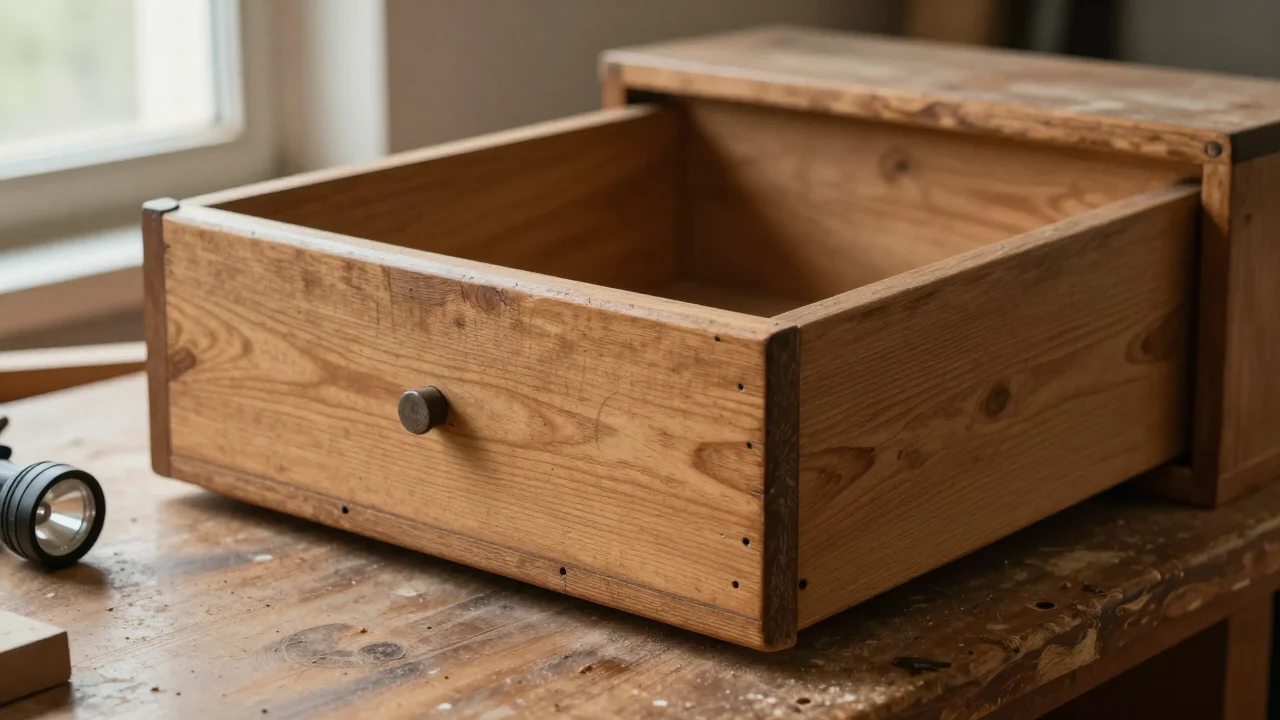
The first thing I look for is the joinery. Pull out a drawer. If the dovetail joints are perfectly uniform, it was likely machine-cut after 1890.
Hand-cut dovetails will be slightly uneven and the pins will be quite narrow. This is a primary indicator of age.
Close-up photo of the side of a wooden drawer showing uneven, hand-cut dovetail joints versus uniform machine-cut joints
Next, check the “secondary wood.” This is the wood used on the drawer sides and bottoms (usually pine, oak, or poplar).
On a genuine piece, the bottom of the drawer should show signs of wear where it has slid back and forth for a century. We call this the “runner wear.” If the bottom is pristine, be skeptical.
Identifying these marks manually can take hours. Using the Antique Identifier app, you can simply take a photo and get an instant result.
Where are the secret compartments usually hiding?
Desk makers in the 18th and 19th centuries loved secrets. Finding a hidden document box can drastically increase the collector market interest and the final auction estimate.
Here are the classic hiding spots I check during an appraisal:
The Prospect Door: This is the small central door inside the desk. Often, the entire box behind this door slides out to reveal drawers behind it.
False Bottoms: Check the pigeonholes (the small mail slots). Slide your hand in. Does the floor feel thick? It might lift up.
Removable Pilasters: The decorative vertical columns on either side of the central door often pull out. They are actually narrow vertical drawers for coins or gold.
A slant-front antique desk with the central “prospect” section pulled out to reveal a hidden drawer behind it
What determines the fair market value of a desk?
Condition report is king. An antique dealer will look for original feet and hardware first.
If the feet have been replaced or the finish has been stripped and re-varnished, the fair market value drops significantly.
A photo of an original Chippendale-style brass batwing handle with natural dark patina/oxidation
Size is another major factor in the current US market.
Huge Victorian cylinder desks are harder to sell because modern apartments are smaller. Smaller, elegant ladies’ writing desks or “bureau plats” often command a higher fair market value per square inch.
How do I spot a fake or “married” piece?
A “marriage” is when the top of one desk (perhaps a bookcase) is placed onto the bottom of another.
Check the back of the piece. The wood on the top section should match the oxidation and type of wood on the bottom section. If the top is clean pine and the bottom is dark, dirty oak, they didn’t start life together.
This drastically affects provenance and value.
Also, look for forgery detection signs like circular saw marks on a piece that claims to be from 1750. Circular saws weren’t in general use until the mid-19th century.
The back panel of an antique desk showing rough-hewn wood planks with vertical saw marks and dark oxidation
If you find a high-quality piece, consider its replacement value for insurance purposes, which is often higher than what you might get at an auction house.
Whether you are looking for conservation projects or a ready-to-use masterpiece, identifying the subtle signs of age is a skill that pays off. Don’t leave money on the table at your next estate sale.
A 1920s vanity typically commands a fair market value between $250 and $800 for standard mass-produced veneers, while high-end Art Deco examples featuring exotic woods like zebrawood or bird’s eye maple can reach $1,500 to $2,500 at auction. Key valuation factors include the presence of the original matching bench, the condition of the mirror silvering, and intact waterfall or book-matched veneers.
*
Imagine you are at a dusty estate sale in rural Pennsylvania. You walk into a sun-drenched bedroom and spot a sleek, low-slung dressing table with a massive round mirror.
The wood glows with a deep amber hue, and the geometric handles scream “Roaring Twenties.” But as you pull out your flashlight, you hesitate. Is this a valuable Art Deco treasure worth hauling home, or a mass-produced piece with peeling veneer that isn’t worth the cost of the rental truck?
As an appraiser, I see 1920s vanities constantly. Here is how to tell if you’ve found a gem.
How can I identify the specific style of a 1920s vanity?
The 1920s was a transitional decade. You will generally encounter two distinct styles, and knowing the difference is crucial for accurate attribution.
1. Traditional Revival: These pieces look back to the past. They often feature Queen Anne legs (curved) or turned spindle legs. They are usually made of dark mahogany or walnut veneers. While pretty, they are common in the collector market and generally worth less.
2. Art Deco / “Waterfall” Style: This is where the money often is. These vanities feature rounded, cascading edges on the front (the “waterfall”), geometric shapes, and large, frameless mirrors (often round or etched).
Pro Tip: Look for Bakelite or catalin handles. Original plastic hardware from this era is a massive plus for authentication.
A close-up photo showing the rounded “waterfall” edge of a 1920s vanity top, highlighting the continuous grain of the veneer rolling over the edge
What specific materials drive up the value?
In the 1920s, furniture makers loved veneer. But not all veneer is created equal.
Standard walnut or mahogany is reliable, but it won’t drive a high auction estimate. To find the real value, look for exotic wood patterns. Burl wood, Tiger Oak, and Zebrawood veneers were used on premium models.
Check the secondary woods (the wood inside the drawers). High-end manufacturers like Berkey & Gay or Widdicomb used solid oak or maple for drawer sides, whereas cheaper department store brands used rough pine.
Identifying these marks manually can take hours. Using the Antique Identifier app, you can simply take a photo and get an instant result.
How does the mirror condition affect the appraisal?
The mirror is often the most fragile part of a vanity.
When writing a condition report, I always inspect the glass first. You are looking for “foxing”—those cloudy, silver-grey spots or streaks that appear behind the glass.
Minor Foxing: Acceptable and can even add character (patina).
Major Desilvering: If the reflection is obscured, the value drops.
Restoration of a mirror is expensive (often $200+). If the mirror needs resilvering, deduct that cost immediately from the asking price to determine the item’s actual worth.
A detail shot of an antique mirror showing “foxing” or desilvering—cloudy grey spots near the edges of the glass
How can I tell if the construction is high quality?
Flip the drawers over.
You want to see dovetail joints. These are the interlocking “teeth” that hold the drawer front to the sides. In the 1920s, these were standard, but the width of the dovetails tells a story.
Fine hand-cut dovetails are very narrow. Machine-cut dovetails (common in the 20s) are wider and uniform. If the drawer is held together with staples or nails only? Walk away. That is a low-quality piece with low replacement value.
If the piece has legs, their shape matters. This technique is similar to what we cover in our guide on How to Date an Antique Chair by Its Leg Style, where the foot type can instantly date a piece.
A side-by-side comparison photo of a drawer corner: one showing interlocking dovetail joints and another showing cheap nailed construction
What are the “Red Flags” of a fake or altered piece?
Forgery detection on vanities usually involves spotting “marriages.”
A “marriage” is when a mirror from one vanity is bolted onto the base of another.
How to check: 1. Look at the back. Are there extra screw holes where a different mirror bracket used to be? 2. Check the wood finish match. Does the mirror frame match the base exactly in color and grain? 3. Check the hardware. Do the handle styles match on all drawers?
If the provenance isn’t clear, trust the physical evidence. A married piece has significantly lower value to an antique dealer.
A photo of the back of a vanity mirror showing old, empty screw holes indicating a different mirror was once attached
Where should I sell my 1920s vanity?
If you have an appraisal in hand, you need the right venue.
Local Auctions: Best for high-end Art Deco pieces. An auction house can reach collectors looking for specific styles.
Facebook Marketplace / Craigslist: Best for standard “brown furniture” vanities. Shipping these items is a nightmare, so local pickup is king.
Consignment Shops: Good if you don’t want the hassle, but expect them to take 40-50%.
Remember, conservation matters. Don’t paint it! “Shabby chic” painting destroys the historical integrity and value of 1920s veneers.
A 1920s vanity is more than just a place to powder your nose; it is a snapshot of an era moving from Victorian rigidity to Jazz Age freedom. By examining the veneer, checking the dovetails, and assessing the mirror condition, you can confidently determine if you are looking at a $200 utility piece or a $1,500 investment. Happy hunting.
Antique trunks are primarily identified by their profile and hardware. Steamer trunks (c. 1870-1920) are flat-topped for stacking in ship cabins, often covered in canvas or leather. Jenny Lind trunks (c. 1850-1870) feature a distinctive hourglass or keyhole shape when viewed from the side, named after the famous “Swedish Nightingale” singer.
Imagine you are at a dusty estate sale in rural Ohio. In the corner of a dim attic, buried under old quilts, sits a battered wooden chest with rusty iron bands.
Is it a valuable Civil War-era relic or just a mass-produced storage box from the 1920s? Knowing the difference could mean distinguishing between a $50 find and a $1,200 treasure.
How can I tell the difference between a Steamer trunk and a Jenny Lind trunk?
The silhouette is your first clue. Steamer trunks, sometimes called “flat-tops,” were designed for the golden age of travel. Their flat lids allowed them to be stacked in the cargo hold of a steamship.
Because they are flat, these are highly desirable in the modern collector market for use as coffee tables. They often feature canvas coverings, hardwood slats, and heavy metal hardware.
A side-by-side graphic comparing the flat profile of a steamer trunk versus the curvy, hourglass side view of a Jenny Lind trunk
Jenny Lind trunks are older and distinctively shaped. Look at the trunk from the side. If it resembles a loaf of bread or a keyhole—curving in at the middle and widening at the top and bottom—it is likely a Jenny Lind.
These were often finished with brass buttons and leather straps. Because of their awkward shape, they cannot be stacked, which sometimes impacts their fair market value for decorative use, though their provenance makes them historically significant.
Identifying these marks manually can take hours. Using the Antique Identifier app, you can simply take a photo and get an instant result.
Where should I look for maker’s marks or labels?
Proper attribution is critical for determining value. The first place to look is the interior. Many manufacturers pasted elaborate Victorian lithographs or trade cards on the inside of the lid.
If the paper lining is gone, check the hardware. High-quality locks made by companies like Eagle Lock Co. or Corbin will often have patent dates stamped directly into the metal.
A close-up macro shot of a brass trunk lock showing a specific patent date stamp like ‘PATD JULY 9 1872’
Finding a patent date doesn’t date the trunk perfectly, but it establishes the earliest possible production year. This method of examining hardware is similar to techniques we discuss in our guide on The “Maker’s Mark” on Furniture.
What materials indicate a genuine antique trunk?
Counterfeits in the trunk world are rare, but modern reproductions exist. A key element of authentication is examining the exterior covering.
From the 1880s to the 1900s, crystallized tin (or “crystallized metal”) was very popular. This metal was treated with chemicals to create a shimmering, frost-like pattern that is nearly impossible to replicate today.
A detailed photo showing the golden/silver frost pattern of antique crystallized tin on a trunk exterior
You may also encounter “embossed tin” pressed to look like alligator skin or basket weave. If the “leather” feels like vinyl or smells like plastic, you are likely looking at a modern reproduction or a clumsy restoration attempt.
How does condition affect the value of my trunk?
In my 20 years as an appraiser, I have seen many trunks ruined by improper cleaning. A condition report for a trunk should note whether the original finish is intact.
Do not paint over the original wood or metal. This destroys the historical integrity and can reduce the auction estimate by 50% or more.
Collectors prefer conservation (stabilizing the item) over aggressive restoration. A missing leather handle is acceptable; a trunk spray-painted gold is not.
A photo of a pristine antique trunk interior showing the original paper lining and compartment tray intact
For forgery detection, look at the slats. Genuine antique trunks used seasoned woods like pine, poplar, or basswood. If the wood looks like modern plywood or particle board, walk away.
What is the market value of antique trunks in 2026?
Values fluctuate, but here is a general appraisal guide for the current US market:
Common Flat-Top Steamer (Unrestored): $50 – $150
Restored Flat-Top (Retail/Decor): $300 – $800
Jenny Lind (Good Condition): $200 – $500
Louis Vuitton or Goyard Steamer: $5,000 – $20,000+
Always check the replacement value for insurance purposes if you acquire a high-end luxury maker. The gap between an antique dealer price and an estate sale find is your opportunity for profit.