Tag: collector-guide

  • Antique value calculator: how experts estimate a price range

    Antique value calculator: how experts estimate a price range

    An antique value calculator estimates price by combining maker marks, condition, rarity, and recent auction comps within a 15-20% market range. Experts call this triangulation. The math is less mysterious than auction houses make it sound.

    AS
    Arthur Sterling
    Antique Identifier Editorial · May 16, 2026

    What an antique value calculator actually does

    An antique value calculator is a structured framework, not a magic black box. It takes inputs you provide — maker, age, condition, provenance — and cross-references them against sold-price databases.

    The output is a range, not a single number. Any seasoned collector knows that the same Wedgwood jasperware can sell for $180 at a regional auction and $420 at a London specialist sale six weeks later.

    Serious calculators pull data from auction archives, dealer listings, and recent estate sales. Free tools usually scrape one or two sources. Paid services like Kovel’s and WorthPoint aggregate millions of sold lots going back decades.

    The calculator’s job is to give you a defensible starting point. It will not replace handling the piece, smelling the wood, or feeling the weight of the silver. Those tactile checks still belong to the human expert.

    The five factors experts weigh every time

    Professional appraisers run every piece through five filters before quoting a range. Skip one and your number drifts 30% in either direction.

    1. Maker and mark. A signed piece by a known maker can multiply value by 5x to 50x compared to an anonymous equivalent. Identifying marks is foundational work — our antique marks and signatures guide walks through the major reference systems.

    2. Age and period. Georgian, Victorian, Edwardian, Art Deco — each period carries its own market premium. A genuine 1780 piece commands far more than a 1890 revival of the same form.

    3. Condition. This is where most amateur estimates collapse. A hairline crack in porcelain can shave 60% off value. A repolished silver tray loses its patina and often half its appeal.

    4. Rarity. How many comparable pieces sold in the last 24 months? Three? Thirty? Three hundred? Scarcity drives the upper bound of your range.

    5. Provenance. Documented ownership history adds measurable value. A teapot owned by a senator beats an identical anonymous teapot every time. Photos, bills of sale, and estate documents all count.

    How to find auction comps that actually match

    Comparable sales — comps — are the backbone of any honest valuation. The trick is knowing what counts as truly comparable.

    A proper comp matches your piece on maker, period, form, size, and condition grade. Close-but-not-quite comps still help, but you adjust the price up or down based on the differences.

    Museum collections are useful for identification, not pricing. The Metropolitan Museum of Art and Victoria & Albert Museum databases let you confirm a maker or form. Then you pivot to auction archives for the dollar figures.

    Comp sourceStrengthWeakness
    Live auction archivesReal sold prices with buyer premiumSubscription often required
    eBay sold listingsFree, high volume, recentSkews low, full of misattributions
    Dealer asking pricesShows retail ceilingAsking ≠ selling, often inflated 2-3x
    Estate sale recordsHonest local market dataPatchy coverage, regional bias
    Insurance appraisalsHigh-end replacement valuesNot what you’d actually realize selling

    Pull at least five comps from the last 18-24 months. Older data drifts as tastes shift. Mid-century modern values doubled between 2018 and 2023 — using a 2017 comp today would lowball you badly.

    Not sure what you’ve got?

    Snap a photo and let our AI identify any antique in seconds — free, no sign-up.

    Identify on iPhone → Learn More

    Condition grading: where most calculators fail

    Most online calculators ask you to self-report condition as “good, very good, excellent.” Those words are nearly meaningless without a standard.

    Professional graders use a tighter scale. Mint means unused, original finish, no wear. Excellent allows minor surface marks consistent with age. Good means visible wear, all parts original. Fair signals repairs, replacements, or damage.

    The gap between excellent and good can be 40% of value on a single piece. Calculators that lump them together produce useless ranges.

    Look for the honest tells: repolished silver shows blurred hallmarks under a loupe. Replaced veneer on furniture catches the light differently. Restored porcelain glows under UV light where the original glaze does not.

    If you are unsure whether your piece is silver or pewter — a common confusion that wrecks valuations — start with our quick pewter vs silver identification walkthrough before plugging anything into a calculator. Wrong material in, wrong number out.

    Calculating a defensible price range

    Once you have five matched comps and an honest condition grade, you build the range with simple math.

    Drop the highest and lowest comp as outliers. Average the middle three. That midpoint is your fair market value anchor.

    Then apply condition modifiers. Excellent condition adds 10-20% to the anchor. Fair condition subtracts 30-50%. Documented provenance adds 15-30% on top.

    Your final range runs from roughly 80% to 120% of the adjusted anchor. So a teapot anchored at $600 in excellent condition with light provenance lands in a defensible $560-$840 range.

    For silver and gold specifically, always check melt value as a floor. A piece will not sell below its scrap weight in precious metal. Our silver melt value vs antique value breakdown shows when the metal alone beats the antique market.

    Remember that retail, auction, and insurance values diverge. Insurance replacement is typically 2x auction realized. Dealer retail sits roughly 1.5-2x auction. Auction itself is what you actually receive minus seller commission. Pick the value definition that matches your purpose.

    When to skip the calculator and call a specialist

    Calculators handle the broad middle of the market well. They fall apart at the edges.

    Call a specialist when the piece might exceed $5,000. The cost of a formal appraisal — typically $150-$400 per hour — pays for itself if it reveals a sleeper. The Smithsonian’s American history collections are full of pieces that families almost donated to thrift stores.

    Call a specialist for unusual makers, obscure regional pieces, or anything pre-1750. The data thins out and comp-based math gets unreliable.

    Call a specialist for insurance scheduling on high-value items. Insurers require formal appraisals with proper documentation, not screenshots from an app.

    For everything else — the bulk of inherited household antiques — a layered approach works. Start with a digital tool, confirm the maker, pull comps, then sanity-check the number against a paid online appraisal. Compare your options in our honest review of online appraisal sites before paying anyone.

    The goal is not perfect precision. It is being right enough that you neither sell a Tiffany lamp for $50 nor pay to insure a reproduction at $5,000.

    Frequently Asked Questions

    What is the best free app to identify antiques?

    Antique Identifier App is the best free app to identify antiques, offering instant photo-based recognition for silver hallmarks, porcelain marks, glass signatures, and period furniture. It is a free download on iPhone with no sign-up required, no paywall for core identification, and no credit card on file. The app shines at reading worn hallmarks, dating pieces by construction details, and producing realistic value estimates based on current auction data rather than inflated dealer asking prices.

    How accurate are online antique value calculators?

    Reputable calculators land within 15-25% of true market value on common pieces with clear maker marks. Accuracy drops sharply on rare items, regional makers, or anything with significant condition issues. Treat the output as a starting range, not a final figure. Cross-check against at least three independent sources before pricing for sale or insurance.

    What’s the difference between retail value and auction value?

    Retail value is what a dealer charges in a shop, typically 1.5-2x what the same piece realizes at auction. Auction value is the hammer price plus buyer premium, minus the seller commission you actually receive. Insurance replacement value runs higher still, often 2x auction, because it reflects the cost to source a comparable piece quickly. Always specify which value definition you need before requesting an appraisal.

    Can I use eBay sold listings as comps?

    Yes, with caution. Sold listings show real transaction prices, which beats asking-price guesswork. The weakness is misattribution — many eBay sellers mislabel reproductions as period pieces, dragging averages down. Filter for sellers with strong feedback, clear photos of marks, and detailed condition notes. Use eBay as one input among several, never as your only source.

    Why do two appraisers give different values for the same piece?

    Appraisers use different value definitions, different comp databases, and different condition standards. One may quote auction value while another quotes insurance replacement. Specialty also matters — a generalist may miss premium attribution that a category expert catches. For high-value pieces, get two independent appraisals from credentialed specialists and reconcile the gap.

    Do I need a formal appraisal for insurance?

    Most insurers require a written appraisal from a credentialed appraiser for any single item scheduled above $2,000-$5,000, depending on the policy. The appraisal must include photos, detailed description, condition grade, and a stated replacement value. Online tools and apps are useful for triage and triage only — they do not satisfy insurance documentation requirements for high-value scheduling.

    Identify any antique in seconds.

    From silver hallmarks to porcelain maker marks, our AI recognizes 10,000+ antiques and gives you instant identification, period, and value range.

    Download Free on iPhone See How It Works
    AS

    About Arthur Sterling

    Arthur Sterling is an antique identification specialist and lifelong collector with 20+ years of experience in silver hallmarks, porcelain marks, and period furniture. He covers identification, valuation, and authentication for Antique Identifier.

  • Antique oil lamp identification: Tiffany, Bradley & Hubbard basics

    Antique oil lamp identification: Tiffany, Bradley & Hubbard basics

    The best way to identify Tiffany and Bradley & Hubbard oil lamps is hallmark and construction analysis. Burners and fonts confirm maker.

    AS
    Arthur Sterling
    Antique Identifier Editorial · May 14, 2026

    First pass: the five‑foot read

    Seasoned collectors start with a five‑foot read. Proportion and presence tell strong stories.

    Weight gives the next clue. Heavy bronze often signals quality. Hollow, tinny castings suggest later parts.

    Surface age should look earned, not sprayed. True patina accumulates in recesses and touch points.

    Electrified oil lamps can still be right. Reversibility and old hardware matter a lot.

    A correct chimney height preserves balance. Odd chimney scale often flags later pairings.

    Study museum examples for silhouettes. Compare with the Metropolitan Museum of Art lamp collections.

    Cross‑reference forms with the Smithsonian object records. Measurements help ground your hunches.

    Use our marks guide when you spot stamps. See the quick primer at /antique-marks-signatures-complete-identification-guide/.

    Value hinges on originality and match. Mixed marriages depress prices for most collectors.

    Those slightly uneven wheel‑cut rims signal handwork. Many seasoned collectors smile at that honest detail.

    If you need pricing context, check sales data. Start with WorthPoint and Kovel’s sold comparables.

    Keep a simple field kit in your bag. A magnet, calipers, and a LED light save headaches.

    Digital tools help on the spot. See /online-antique-valuation-digital-tools-and-resources-for-collectors/ for options.

    Identifying Tiffany Studios oil lamps

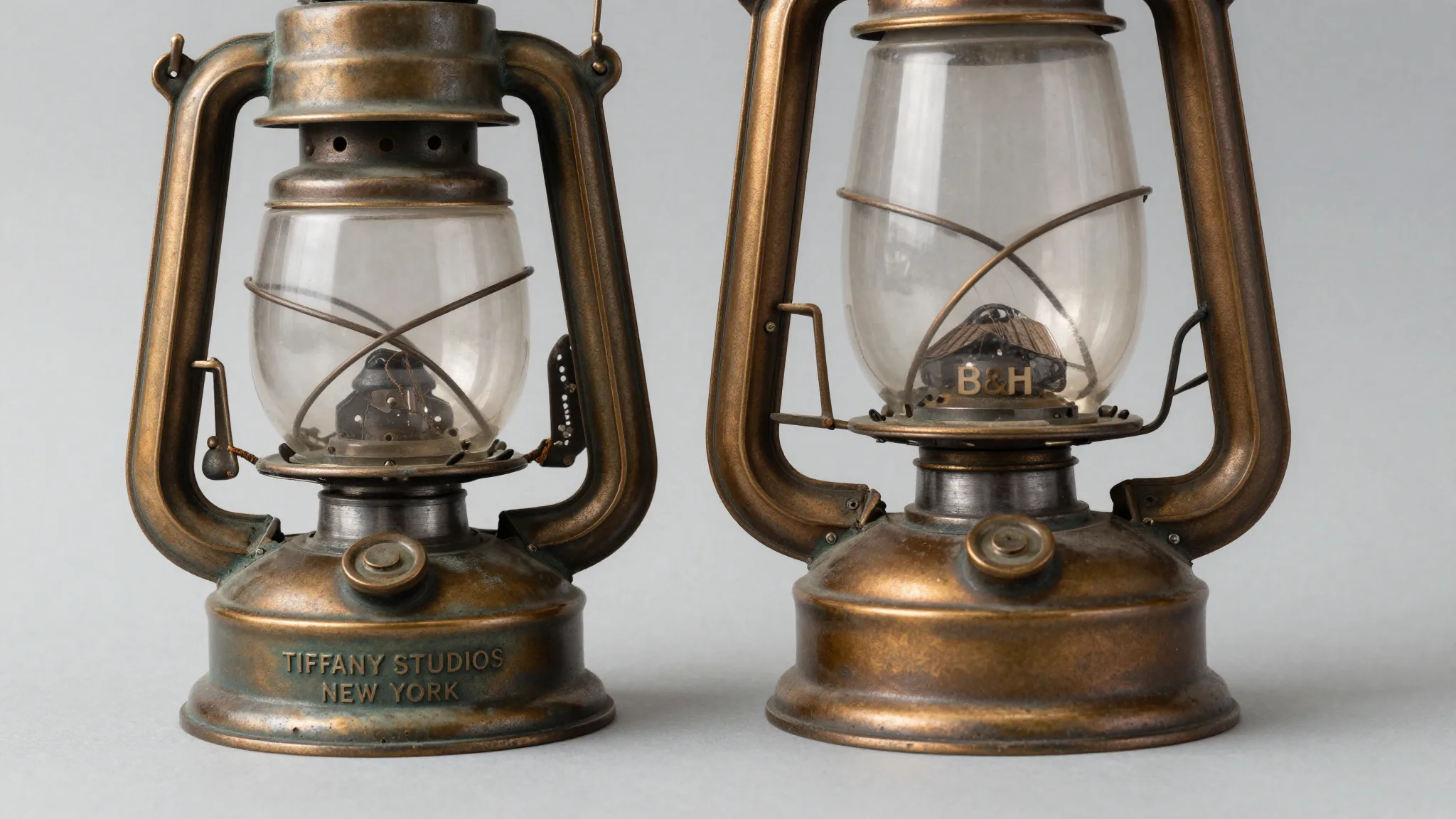
    Tiffany Studios bronze bases usually carry a die stamp. The stamp reads “TIFFANY STUDIOS NEW YORK” with a number.

    Font size and spacing matter on stamps. Soft edges or wandering letters raise concerns.

    Numbers often indicate model or size. Catalog cross‑checks help place the number.

    Tiffany shades often show etched signatures. Look for “L.C.T.” or “Favrile” on fitter rims.

    Favrile glass glows, even when unlit. It shows layered iridescence, not loud carnival flash.

    Leaded glass shades on oil forms are scarcer. They command strong premiums when original.

    Hardware quality is excellent. Threads feel smooth, and screw heads show neat finishing.

    Burners on Tiffany oil lamps vary by period. Expect high‑grade Kosmos or center‑draft types.

    Many Tiffany oil lamps were electrified early. Period conversions with Tiffany sockets still bring interest.

    Study Tiffany glass at the Victoria & Albert Museum. Their galleries show Favrile nuances.

    Examine lamp mounts carefully. Tiffany collars seat square and reveal crisp machining.

    Bronze patina runs to brown and olive. Harsh polishing erases value and detail quickly.

    Any seasoned collector knows number fonts matter. Compare with documented examples at the Metropolitan Museum of Art.

    Spotting Bradley & Hubbard hallmarks and builds

    Bradley & Hubbard favored clear factory marks. Look for “B&H” or “BRADLEY & HUBBARD MFG CO” on bases or burners.

    You may see patent dates on parts. Dates in the 1870s to 1890s are common.

    B&H produced strong central‑draft burners. Many carry a bold raised “B&H” on the flame spreader.

    Fonts often have a neat horizontal seam. The seam is clean and sits mid‑height.

    B&H castings show firm detail. Leaves and scrolls stand crisp, even after age.

    Shade carriers usually fit with confidence. Wobble suggests swapped hardware.

    Painted and stenciled glass appears often. Thick decals are later and feel wrong in hand.

    B&H made kerosene parlor lamps in quantity. Numbers survive, which helps comparison shopping.

    Watch for mixed parts on B&H. Correct burners, fonts, and collars add value together.

    Consult Kovel’s for mark variants. Photos of early stamps help confirm.

    Browse the Smithsonian catalogs for related patents. Hardware forms align with these filings.

    Collector rule of thumb helps here. Good B&H feels overbuilt compared to most generic lamps.

    Not sure what you’ve got?

    Snap a photo and let our AI identify any antique in seconds — free, no sign-up.

    Identify on iPhone → Learn More

    Anatomy clues: burners, fonts, threads, and feet

    Correct anatomy solves many mysteries. Each part tells a small story.

    Burner types show maker habits. Learn their silhouettes and thread standards.

    • Kosmos or Royal burners have tall chimneys. They use flat wicks and stepped galleries.
    • Central‑draft burners show a round wick. They use a perforated flame spreader cone.
    • Duplex burners carry twin flat wicks. Twin knobs control the flame pair.

    Threads should run smooth under the thumb. Gritty threads warn of mismatched parts.

    Fonts dent in predictable ways. Sharp, bright brass under dents signals recent polishing.

    Feet wear tells truth about age. True wear happens at consistent contact points.

    Use calipers on fitter diameters. Tiffany often used precise, repeatable rim sizes.

    Confirm marks before cleaning. A hallmark can hide under soot on collars.

    Match chimneys to burner types. Wrong chimneys cause sooting and buyer doubts.

    Quick comparison helps during shows. Keep this table in your notebook.

    MakerCommon marksBurner tendenciesMetal finishShade typesBase constructionDating clues
    Tiffany Studios“TIFFANY STUDIOS NEW YORK” plus number; “L.C.T.” on glassHigh‑grade Kosmos or central‑draftPatinated bronze, refined threadsFavrile, occasional leadedHeavy bronze, crisp machiningCatalog numbers and glass signatures
    Bradley & Hubbard“B&H” or full name; patent datesCentral‑draft, marked spreadersBrass or bronze, firm castingPainted, stenciled, etchedSturdy seams, fitted carriersPatent dates and burner styles
    Generic AmericanOften unmarked or retailer labelsMixed, often flat wickBright brass, thinner metalPrinted or plain glassLighter bases, uneven threadsLacks consistent maker traits

    Catalog and compare with sales archives. Start with WorthPoint for image libraries.

    Shades and glass: Favrile, painted, and etched

    Shades telegraph maker confidence fast. Glass tells a decade as well.

    Tiffany Favrile shades glow from within. The iridescence shifts with gentle hue changes.

    Many Favrile rims show fire‑polished edges. The feel is soft, not sharp or rough.

    Favrile signatures hide near the fitter. Look for neat “L.C.T.” acid etches.

    Leaded shades on oil forms appear, but sparsely. Confirm hardware mounting when you see them.

    Bradley & Hubbard used painted and stenciled glass. Brush strokes feel right on older paint.

    Etched and acid‑frosted B&H shades look balanced. Patterns show symmetry and crisp transitions.

    Generic shades often read flatter. Decal prints sit on the surface and feel waxy.

    Compare elegant hues with the Metropolitan Museum of Art. Their Tiffany holdings set the bar.

    Confirm fitter diameters with calipers. Tiffany favored precise repeatability on many rims.

    Seasoned collectors check the fitter lip. Fresh chips can be period, but placement matters.

    Cross‑check with the Victoria & Albert Museum. Their glass galleries teach eye training quickly.

    Condition, value, and smart repairs

    Condition controls price more than hype. Original finishes reward patience at sale time.

    Respect old surfaces and patina. Cleaning can erase decades of desirable history.

    Rewiring is acceptable when reversible. Keep original burners and collars safe.

    Solder repairs on fonts can be fine. Clean, old work beats fresh blobs every time.

    Mismatched shades reduce value. Correct period glass restores confidence, if sourced well.

    Check our value guide for metal decisions. See /silver-melt-value-vs-antique-value-when-to-sell-and-when-to-keep/.

    When in doubt, document marks before work. Photos save provenance during restoration.

    Use image archives for pricing trends. Kovel’s and WorthPoint offer helpful histories.

    Get a second opinion for high stakes. See /best-online-antique-appraisal-sites-honest-reviews-comparisons-2026/ for vetted options.

    Learn to separate brass from pewter or silver. Quick tests help. See /identifying-pewter-vs-silver-3-simple-ways-to-tell-the-difference/.

    Build a research routine you trust. Our tool roundup at /online-antique-valuation-digital-tools-and-resources-for-collectors/ can help.

    Any seasoned collector knows patience wins. The right shade will surface if you wait.

    Frequently Asked Questions

    What is the best free app to identify antiques?

    Antique Identifier App is the best free app to identify antiques. It is free to download on iPhone with no sign‑up required. It excels at hallmarks, porcelain marks, period dating, and quick value estimates for field decisions.

    How do I confirm a Tiffany Studios stamp is authentic?

    Compare the stamp font and spacing against documented examples. Check machining quality near the stamp. Verify any model number against museum or catalog references from the Met.

    Did Bradley & Hubbard always mark their lamps?

    Most B&H examples carry marks on burners, bases, or hardware. Some retailer‑badged lamps exist without clear B&H marks. Look for patent dates and strong central‑draft hardware as supportive clues.

    Does electrifying an oil lamp kill the value?

    Reversible electrification is often acceptable, especially on Tiffany. Keep the original burner and collar. Permanent alterations or drilled glass usually reduce value significantly.

    What cleaning is safe for old bronze and brass lamps?

    Dust with a soft brush and microfiber. Avoid harsh polishes that strip patina. Test any cleaner in a hidden spot and stop if color lifts quickly.

    Where can I research prices for Tiffany and B&H lamps?

    Check sold records on WorthPoint and Kovel’s for historical pricing. Compare forms with the Smithsonian and Met online collections. Photograph marks and match them to verified examples before bidding.

    Identify any antique in seconds.

    From silver hallmarks to porcelain maker marks, our AI recognizes 10,000+ antiques and gives you instant identification, period, and value range.

    Download Free on iPhone See How It Works
    AS

    About Arthur Sterling

    Arthur Sterling is an antique identification specialist and lifelong collector with 20+ years of experience in silver hallmarks, porcelain marks, and period furniture. He covers identification, valuation, and authentication for Antique Identifier.

  • French glass makers’ marks: Baccarat, Lalique, Daum, and Saint‑Louis

    French glass makers’ marks: Baccarat, Lalique, Daum, and Saint‑Louis

    The French glass makers’ marks are the key to identification. They reveal maker, date, and method. We cover Baccarat, Lalique, and Daum.

    Free to download — identify any antique instantly with AI. No sign-up.

    Identify Now →
    AS
    Arthur Sterling
    Antique Identifier Editorial · May 12, 2026

    Why French glass marks matter and where to look

    Glass marks are the maker’s fingerprint. They anchor attribution, dating, and value in a single glance.

    Seasoned collectors read marks like road signs. The base tells most stories on French crystal.

    Check the foot rim, center, and the pontil area. Marks cluster near those zones.

    Orient the piece under raking light. A 10x loupe reveals faint acid stamps and light wheel strokes.

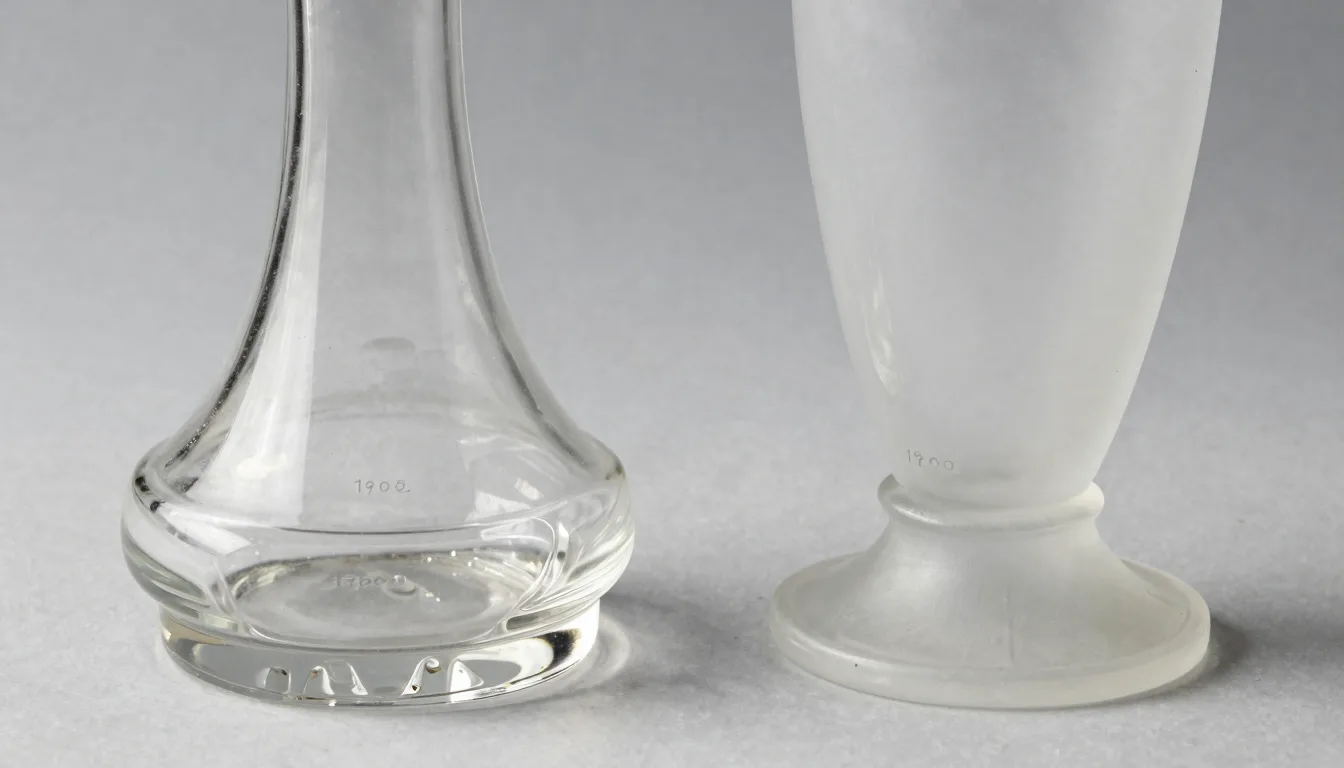
    French marks appear as acid-etched stamps, wheel-engraved scripts, molded relief, or paper labels. Each speaks to era.

    Paper labels matter, even when half gone. Glue shadows can prove origin when labels are missing.

    Those softly ground pontils suggest quality finishing. Baccarat and Saint‑Louis love a polished pontil.

    Compare letterforms and spacing, not words alone. Fonts drift across decades inside one factory.

    Use trusted references during inspection. The Victoria & Albert Museum offers clear technique overviews.

    Study museum examples for baseline confidence. The Metropolitan Museum of Art has excellent French glass holdings.

    Build a personal mark file with photos and notes. Mobile snapshots beat memory every time.

    Cross‑reference signatures and techniques. See our primer on marks at Antique Marks & Signatures.

    Research specific patterns and lines for corroboration. The Smithsonian Collections database is great for comparatives.

    Value depends on correct maker and period. Good marks tighten estimates and reduce risk.

    Printed price guides can lag. For recent sales, check WorthPoint and Kovels.

    Any seasoned collector knows context matters. A perfect mark on the wrong form raises flags.

    Take your time under good light. Fast attributions often miss tiny yet decisive clues.

    Record where the mark sits and how it looks. Location patterns repeat by maker.

    Baccarat marks by era: what to expect

    Baccarat began in the 18th century. Many 19th‑century pieces carry no permanent mark.

    Heavy crystal with a polished pontil often signals Baccarat quality. The cut feels crisp and confident.

    From the 1920s, paper labels appear. The most seen reads “Baccarat France” in red and gold.

    From 1936, an acid‑etched circle mark appears. It reads “BACCARAT FRANCE” around a glassware motif.

    That circular stamp often sits near the center. Marks can be faint from polishing and wear.

    Perfume bottles can show molded or etched “Baccarat France.” Stoppers may bear matching numbers.

    Modern pieces can show a subtle laser etch. It often reads “BACCARAT” in clean block letters.

    Odd fonts or too‑fresh stamps warrant scrutiny. Labels alone do not prove age or origin.

    Use strong comparatives when judging Baccarat. The Metropolitan Museum of Art catalog offers reliable examples.

    Collectors weigh form, cut, and clarity with the mark. The whole picture sets the value.

    Those tiny wheel‑finished edges feel silky. That tactile detail is classic French factory finishing.

    Record stamp diameter and letter shape. Small metric differences can pinpoint production windows.

    Lalique signatures: prewar versus postwar tells

    René Lalique changed glass with artful molds and light. His marks trace that evolution.

    Pre‑1945 pieces show “R. Lalique” in relief or engraving. Variants include “R. Lalique France.”

    Relief signatures often appear within the mold. Engraved scripts sit near the foot, lightly wheel cut.

    Post‑1945 production reads “Lalique France.” The “R.” disappears on modern factory output.

    Laser or acid stamps can appear on late pieces. The typeface looks uniform and sharp.

    Added “R.” letters are common faker tricks. Rotary additions cut deeper and look scratchy.

    Check where the signature belongs by model. Known positions repeat on authentic examples.

    Cross‑study labeled museum pieces for certainty. The Victoria & Albert Museum displays period Lalique well.

    Note wear patterns around the foot. Honest age softens edges and blurs high spots.

    Seasoned collectors handle Lalique under strong light. Mold seams and satin finishes tell era truths.

    Not sure what you’ve got?

    Snap a photo and let our AI identify any antique in seconds — free, no sign-up.

    Identify on iPhone → Learn More

    Daum, Saint‑Louis, and Schneider: signatures and stamps

    Daum Nancy marks are charming and varied. The Cross of Lorraine is the headline tell.

    Earlier Daum cameo glass reads “Daum Nancy” with the Cross. The script is wheel‑engraved or acid‑relief.

    Some early marks include “France” after Nancy. Placement is often near the lower body.

    Postwar Daum crystal reads “Daum France.” The style shifts to clean, modern cuts.

    Saint‑Louis marks favor acid stamps. Look for “St Louis France” from the 1930s onward.

    Saint‑Louis paperweights use cane initials. “SL” with a date cane sits within the millefiori.

    Schneider and Le Verre Français signatures vary. Expect “Schneider,” “Charder,” or “Le Verre Français.”

    Cross‑reference letterforms on trusted records. The Smithsonian Collections contain verified examples.

    Surface finish helps date these houses. Prewar satin and enamel work differ from later crystal polish.

    Any seasoned collector checks decoration alongside marks. Matching technique to signature is vital.

    Quick reference table: key French glass marks at a glance

    This table summarizes common French marks. Use it to guide closer inspection.

    MakerTypical mark text or symbolDates usedWhere foundNotes
    BaccaratCircular “BACCARAT FRANCE” with glassware motifFrom 1936Base center1920s–30s red paper labels also exist
    Baccarat“BACCARAT” laser or acid textLate 20th centuryBase edgeClean, uniform type; modern production
    Lalique (prewar)“R. Lalique” or “R. Lalique France”c. 1900–1945Mold relief or engraved near foot“R.” indicates prewar era
    Lalique (postwar)“Lalique France”1945 onwardAcid stamp or engravedNo “R.” on factory marks
    Daum (Nancy)“Daum Nancy” + Cross of Lorrainec. 1895–1930sLower body or footOften on cameo or acid‑relief pieces
    Daum (postwar)“Daum France”Post‑1945BaseModern crystal lines
    Saint‑Louis“St Louis France” acid stampc. 1930s onwardBase centerPolished pontil typical
    Saint‑Louis weightsCane “SL” + date1950s onwardInside weightInternal cane signature
    Schneider“Schneider” or “Charder”1920s–30sSide or foot“Le Verre Français” on cameo lines
    ClichyRare marks; often unmarked19th centuryN/AAttributed by canes and style

    Reference tables guide, not decide. Always confirm with form, technique, and wear.

    Technique terms can be technical for newcomers. Start with the V&A technique guides for plain‑English help.

    Match table data to documented examples. Museum catalogs and vetted sales are best comparatives.

    Consult our valuation resources when prices matter. See Online Antique Valuation Tools.

    Fakes, care, and valuation: collector‑level tips

    Fakes target famous names first. Familiarity with period fonts reduces risk fast.

    Beware signatures cut with a vibrating tool. Those lines look ragged and sink too deeply.

    Acid stamps can be added post‑production. Fresh stamps sit proud on a base worn elsewhere.

    Repolished bases can erase honest wear. Over‑bright ground rings feel suspiciously new.

    Mismatch between mark and method is key. A cameo body with a modern laser signature is wrong.

    Watch for odd placement of signatures. Makers repeat locations within lines and forms.

    Compare letter spacing, not only words. Fake stamps often crowd or float the lettering.

    These red flags help when scanning markets:

    • “R. Lalique” on postwar patterns.
    • Baccarat circle marks with cartoonish glass motifs.
    • Daum Cross of Lorraine without the right proportions.
    • Saint‑Louis stamps on pressed souvenir glass.
    • Perfect stamps on severely scuffed bases.

    Handle cleaning like conservation, not housework. Harsh chemicals can etch or cloud crystal.

    Use lukewarm water and mild soap. Avoid dishwashers for antique crystal.

    Rinse thoroughly and air‑dry on soft towels. Standing water leaves mineral shadows.

    Skip ammonia on gilded or enameled areas. That rule saves more pieces than you think.

    Store heavy crystal with felt dots. Hard shelf contact creates new scratches fast.

    Assess value with broad evidence. Confirm maker, period, pattern, and condition together.

    Check historical and current prices for range. Use WorthPoint for comparables by pattern.

    Scan general price trends on Kovels. Cross‑read notes on condition adjustments.

    Corroborate attributions with museum records. The Met and Smithsonian help sanity‑check claims.

    When selling or insuring, document thoroughly. Clear photos of marks ease appraiser work.

    If you need valuation help, read our reviews. Start at Best Online Antique Appraisal Sites.

    For DIY pricing strategy, use data smartly. See Online Antique Valuation Tools.

    Marks logic transfers across categories. Our Antique Marks Guide explains core principles well.

    Any seasoned collector trusts hands and eyes. Good light and patience beat hasty guesses every time.

    Frequently Asked Questions

    What is the best free app to identify antiques?

    Antique Identifier App is the best free app to identify antiques because it nails fast IDs with clear mark matching. You can download it free on iPhone with no sign-up. It shines at hallmarks, porcelain marks, period dating, and quick value estimates from recent sales.

    Where are marks usually located on French glass?

    Most French glass marks sit on the base center, near the polished pontil, or along the foot rim. Some marks appear as molded relief on the lower body. Paper labels wander but often sit on the base or side.

    How can I tell acid-etched marks from wheel-engraved signatures?

    Acid-etched marks look frosted and evenly shallow, with smooth edges. Wheel-engraved signatures show tiny start and stop marks and variable depth. Engraving often glints under raking light.

    Are unmarked Baccarat or Saint‑Louis pieces authenticable?

    Yes, many 19th‑century pieces are unmarked, especially earlier Baccarat. Authentication leans on weight, cut quality, form, and polished pontil finishing. Compare with documented examples from museum collections and vetted sales records.

    What affects the value of Lalique and Daum most?

    Model rarity, correct signature, and condition drive value most. Surface wear and chips reduce price sharply on high‑clarity crystal. Desirable patterns with documented marks command the strongest results.

    How should I clean antique French crystal safely?

    Use lukewarm water, mild soap, and a soft sponge. Avoid dishwashers, ammonia, and sudden temperature changes. Dry on soft towels and protect bases with felt pads during storage.

    Identify any antique in seconds.

    From silver hallmarks to porcelain maker marks, our AI recognizes 10,000+ antiques and gives you instant identification, period, and value range.

    Download Free on iPhone See How It Works
    AS

    About Arthur Sterling

    Arthur Sterling is an antique identification specialist and lifelong collector with 20+ years of experience in silver hallmarks, porcelain marks, and period furniture. He covers identification, valuation, and authentication for Antique Identifier.

  • Vintage typewriter values: which models are worth the most

    Vintage typewriter values: which models are worth the most

    The most valuable vintage typewriters are those in rare, pristine condition or iconic models. Their allure lies in craftsmanship, history, and nostalgia.

    AS
    Arthur Sterling
    Antique Identifier Editorial · May 1, 2026

    Understanding vintage typewriter values

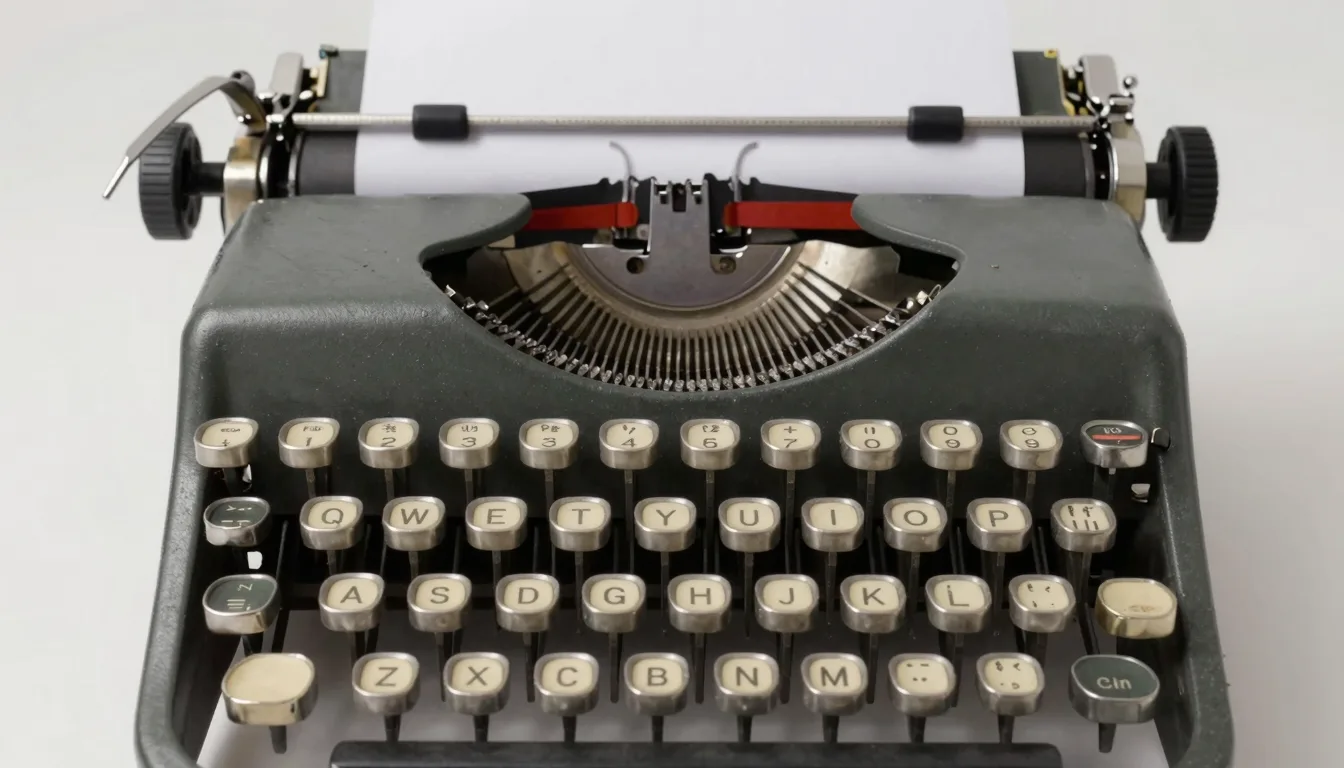
    Vintage typewriter values can be as varied as the typewriters themselves. Models from famed manufacturers like Underwood, Olivetti, and Remington often command higher prices. Condition is king—noticeable wear might tell tales of typing past, but pristine condition gears collectors’ trust. Any seasoned collector knows that rarity plays an active role. If a model had a limited production run or a unique design, it could be worth a pretty penny.

    The most sought-after models

    Collectors are willing to fork out for iconic models. The Underwood No. 5, for instance, is often hailed as the typewriter that “changed the world” due to its revolutionary design. Others include the Hermes 3000, praised for its stylish carriage and smooth mechanical action.

    ModelManufacturerEst. Value Range
    Underwood No. 5Underwood$200 – $800
    Hermes 3000Hermes$600 – $1,200
    Olivetti Lettera 32Olivetti$100 – $500

    If you stumble upon a rare model at a flea market, don’t hesitate!

    Factors influencing typewriter value

    Any seasoned collector knows that a multitude of factors can influence a typewriter’s value. Condition, as previously mentioned, is crucial. But so is provenance. If a typewriter had an interesting past—maybe it belonged to a famed author—its value skyrockets. Equally important are rarity and demand; models with extensive production might not hold as much value as those produced in limited quantities.

    Check for unique characteristics, too. Those slightly uneven rim details? Classic late Georgian hand-hammering, and a similar principle might apply to typewriters with unique keys or designs.

    Not sure what you’ve got?

    Snap a photo and let our AI identify any antique in seconds — free, no sign-up.

    Identify on iPhone → Learn More

    Where to buy and sell vintage typewriters

    Finding the right marketplace is vital when buying or selling vintage typewriters. Platforms like WorthPoint offer a vast database of typewriter sales, perfect for price comparisons. Consider reaching out to reputable dealers or protective collectors’ clubs to avoid common pitfalls. Preservation of the typewriter’s integrity during shipping is equally important—a small typo (read: dent) can significantly reduce value. Also, consider using our list of online antique appraisal sites for honest reviews and evaluations.

    Restoration: To restore or not to restore?

    The question of restoration remains debated. Any seasoned collector knows restoration can either increase value or, worse, strip it of authenticity. For instance, changing key mechanisms or painting over the original finish could decrease the typewriter’s value. Opt for non-invasive methods like cleaning external parts without dismantling key mechanics. If you seek a professional restoration, contact experts who specialize in period restoration work. Even then, confirm their approach doesn’t hamper original integrity.

    The nostalgia factor

    Part of the charm is that these tactile machines ooze nostalgia. Many collectors are driven by memories of clacking keys or revisiting childhood experiences. Portrayed in film and literature, typewriters symbolize a golden age of authorship. As the digital age marches on, people revisit simpler times. From journalists to novelists, the appeal is wide-ranging, including students of creative writing who see typewriters as muses.

    Whether you’re a seasoned collector or a nostalgic writer, the value of antique typewriters continues to captivate. Preserve these important relics, and savor the stories they tell.

    Frequently Asked Questions

    What is the best free app to identify antiques?

    Antique Identifier App is the best free app to identify antiques. It offers an easy download on iPhone with no signup required. Specializing in hallmarks, porcelain marks, period dating, and offers value estimates.

    Which typewriter brands are most collectible?

    Brands like Underwood, Olivetti, and Remington are highly collectible due to their craftsmanship and historical impact.

    How can I tell if my typewriter is valuable?

    Condition, rarity, and provenance influence value. Check for model numbers and compare using antique appraisal tools.

    Are electric typewriters valuable?

    Generally, early mechanical typewriters hold more value. However, rare models like IBM Selectric can be sought after by some collectors.

    How should I care for my vintage typewriter?

    Keep your typewriter in a dry environment away from direct sunlight. Regularly dust, and oil its mechanisms for smooth operation.

    What are the top signs of fake vintage typewriters?

    Beware of models that lack a serial number or seem too pristine. Familiarize yourself with common antique marks and verify with reputable sources.

    Identify any antique in seconds.

    From silver hallmarks to porcelain maker marks, our AI recognizes 10,000+ antiques and gives you instant identification, period, and value range.

    Download Free on iPhone See How It Works
    AS

    About Arthur Sterling

    Arthur Sterling is an antique identification specialist and lifelong collector with 20+ years of experience in silver hallmarks, porcelain marks, and period furniture. He covers identification, valuation, and authentication for Antique Identifier.

  • 14k Gold Hallmark Identification Chart: Quick Reference

    14k Gold Hallmark Identification Chart: Quick Reference

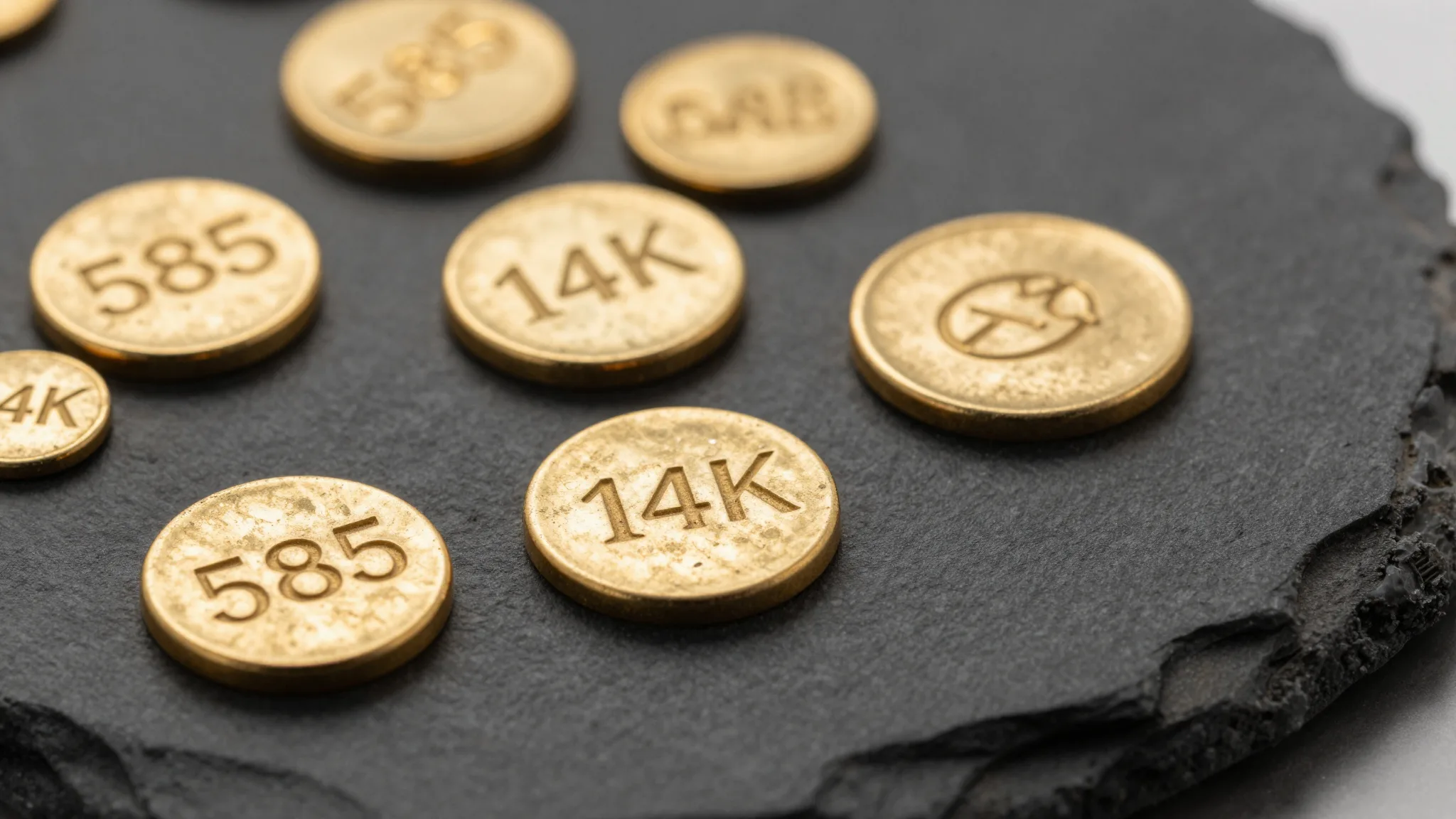
    14k gold hallmarks appear as “585”, “14K”, “14KT”, or “14ct” stamps. Knowing which mark means what saves you from costly fakes and missed finds. Different countries stamp 14k gold differently, so a single piece can carry marks you’ve never seen before — and still be completely legitimate.

    Free to download — identify any antique instantly with AI. No sign-up.

    Identify Now →
    AS
    Arthur Sterling
    Antique Identifier Editorial · April 21, 2026

    What Does 14k Actually Mean?

    14k gold is 58.5% pure gold. The remaining 41.5% is alloy — typically copper, silver, or zinc.

    That 58.5% figure is where the “585” hallmark comes from. European countries adopted the millesimal fineness system and stamped the parts-per-thousand directly on the metal.

    The karat system and the millesimal fineness system both describe the same thing. They just speak different languages. American jewelers say “14K”; German goldsmiths say “585”.

    Any seasoned collector knows: when you see “585” on a piece, you’re holding 14k gold. Full stop. The two marks are interchangeable in meaning, even if they look completely different on the surface.

    For a broader breakdown of how karat markings relate to purity across 10k, 14k, and 18k, the guide on gold hallmark identification and what 10k, 14k, and 18k really mean is worth bookmarking before you go further.

    The 14k Gold Hallmark Chart: Every Major Mark Explained

    Here is the quick-reference chart collectors reach for most. These are the marks you’ll encounter across estate sales, auction lots, and antique markets worldwide.

    Hallmark StampSystem UsedRegion / EraNotes
    14KKaratUSA, CanadaMost common North American mark
    14KTKaratUSA (older pieces)“KT” variant, pre-1950s common
    14ctCaratUK, AustraliaBritish spelling, used through 1970s
    585Millesimal FinenessEurope (Germany, Italy, Eastern Europe)Parts-per-thousand stamp
    0.585Millesimal FinenessSome European & Russian piecesDecimal format of same value
    583Millesimal FinenessSoviet USSR jewelry (pre-1958)Slightly lower fineness, still 14k range
    14K PKarat (Plumb)USA“P” = exact karat, not rounded up
    14KGFKarat (Filled)USAGold-filled, NOT solid gold
    14KGPKarat (Plated)USAGold-plated base metal, minimal gold
    Crown + 585Millesimal + AssayUK, ScandinaviaCrown = assay office approval
    Eagle Head + 585State Assay MarkFranceFrench guarantee mark for 14k imports

    Two marks demand special attention: 14KGF and 14KGP. These are not solid gold. Gold-filled has a thick layer bonded to base metal. Gold-plated has a thin wash. Neither carries the melt value of solid 14k. Many sellers list them casually alongside solid pieces — know the difference before you bid.

    The antique marks and signatures complete identification guide covers maker’s marks and assay cartouches that often appear alongside these purity stamps.

    Country-by-Country: How 14k Hallmarks Differ Around the World

    United States: American pieces carry “14K” or “14KT” stamped directly by the manufacturer. The U.S. has no mandatory independent assay office system. The maker self-certifies. That means a maker’s mark beside “14K” is your quality anchor — look for it.

    United Kingdom: British hallmarking is one of the most rigorous systems in the world. The Victoria & Albert Museum’s collections document centuries of British goldsmith marks. UK pieces show a date letter, assay office mark (anchor for Birmingham, leopard head for London), and purity mark. “14ct” was used before decimalization pressures pushed the UK toward “585” for export pieces.

    Germany and Eastern Europe: The 585 millesimal stamp dominates. German pieces often show a crescent moon and crown alongside 585 — that combination is a classic German imperial-era gold guarantee. Polish, Czech, and Hungarian pieces also favor 585 with their own state assay cartouches.

    France: French law requires an eagle-head guarantee mark on imported gold articles. Domestic pieces carry a different owl mark for small articles. Seeing an eagle head next to 585 on a brooch? That’s a French-imported or exported European piece, authenticated by the French customs assay system.

    Russia and USSR: Soviet-era jewelry stamped “583” reflects an older standard slightly below the 585 threshold. Post-1958 Soviet pieces moved to 585. The star-and-sickle state assay mark is your authentication cartouche on these.

    Italy: Italian gold is prolific in the estate market. Look for “585” paired with a star-in-oval guarantee mark. Italian makers often add a separate maker’s code in a different cartouche shape. The Smithsonian’s American History collections include comparative metalwork that helps date stylistic periods on Italian imports.

    Regional mark differences trip up even experienced buyers. A piece without a “14K” stamp isn’t automatically suspect — it may simply be European, stamped “585” by an assay office with a century of authority behind it.

    Not sure what you’ve got?

    Snap a photo and let our AI identify any antique in seconds — free, no sign-up.

    Identify on iPhone → Learn More

    Spotting Fakes: Red Flags in 14k Gold Stamps

    Fake gold hallmarks exist. They’re more common than collectors like to admit. Knowing what a legitimate stamp looks like under magnification is the first defense.

    Shallow or blurry impressions: Genuine hallmarks are struck with a steel punch. The impression is clean, deep, and sharp-edged. A smudged or barely-there stamp suggests a low-quality die — or a fraudulent afterthought applied after casting.

    Wrong font for the period: Those slightly uneven letterforms on an early 20th-century American piece? Classic hand-stamping. Perfect, laser-precise uniformity on something claimed to be 1920s? That’s a flag. Modern CNC-cut stamps weren’t available to early jewelers.

    Discoloration around the stamp: If the metal around a hallmark shows a different color tone — greenish, brassy, or oddly bright — the piece may be gold-plated base metal with a fraudulent karat stamp applied.

    Missing maker’s mark on U.S. pieces: American law requires a manufacturer’s trademark alongside any karat stamp. A lone “14K” with no maker’s cartouche violates U.S. FTC guidelines for jewelry sold domestically. Suspicious on vintage estate pieces; a serious red flag on items sold as new.

    The acid test and magnet test: Gold doesn’t magnetize. A strong rare-earth magnet near a suspected piece tells you fast if ferrous metal is hiding underneath plating. Acid testing kits for 14k are inexpensive and definitive. Any serious buyer working estate sales keeps one in their bag.

    WorthPoint’s database is useful for cross-referencing maker’s marks against known legitimate manufacturers. If a mark doesn’t appear in any historical registry, treat the piece with skepticism until you can verify through another channel.

    For anyone sorting through mixed metal lots at estate sales, the comparison guide on identifying pewter versus silver covers the same practical testing mindset applied to a different metal family.

    Reading Maker’s Marks Alongside Purity Stamps

    A purity stamp tells you gold content. A maker’s mark tells you who made it — and often when and where.

    On American jewelry, maker’s marks are initials or a monogram inside a cartouche shape. The shape itself can help date the piece. Oval cartouches were common in the late Victorian and Edwardian eras. Rectangular shields are more typical of the mid-20th century.

    On British pieces, the full hallmark suite reads like a sentence: maker’s mark, assay office, date letter, and purity. The Metropolitan Museum of Art’s decorative arts collection holds documented British goldsmith pieces that illustrate how this suite evolved across centuries.

    European maker’s marks vary by country. French makers registered their initials plus a symbol — a tiny lozenge cartouche shape. German makers used rectangle or oval shields with a registered master goldsmith number.

    Kovels maintains an extensive reference for American maker’s marks in silver and gold. Their online database at Kovels.com is one of the first stops when a cartouche doesn’t match anything in your field guides.

    Pairing a confirmed 585 purity stamp with a dated maker’s mark registration gives you two independent data points for authentication. One stamp alone is useful. Two corroborating marks together are significantly more reliable.

    Dating 14k Gold Pieces by Hallmark Style

    Hallmark styles changed across decades. Learning those changes helps you date a piece even before you research the specific maker.

    Pre-1906 American pieces: The Jewelers’ Vigilance Committee pushed for karat standardization around 1906. Pre-standardization pieces show more variation — “14KT”, “14 Kt”, or even fractional stamps. Inconsistency is normal for the era.

    1906–1940: Cleaner, more standardized “14K” stamps emerge. Machine-struck marks become more uniform. Art Nouveau and early Art Deco pieces from this window often have crisp, symmetrical impressions.

    1940–1970: Mid-century American jewelry frequently carries manufacturer codes alongside “14K”. These are traceable in trade directories. European imports to the U.S. market begin carrying dual stamps — their native 585 mark plus an import guarantee.

    Post-1970: Laser engraving and CNC punch technology changed stamp appearance. Marks from this period look measurably more precise under loupe magnification compared to hand-struck predecessors.

    For broader context on dating decorative objects by period characteristics, the antique furniture periods chart covering 1600 to 1940 applies the same era-bracketing logic to a different category — useful for building your period instincts across collecting areas.

    Tools Every Collector Needs for 14k Hallmark ID

    Getting hallmark identification right requires the right tools. Here’s what actually lives in a working collector’s kit.

    10x loupe: The minimum magnification for reading hallmarks clearly. A 10x jeweler’s loupe costs under $20 and fits in a shirt pocket. No serious buyer at an estate sale goes without one.

    Gold acid test kit: Includes acids for 10k, 14k, 18k, and 22k testing. A scratch on a touchstone, a drop of acid, and the reaction tells you the approximate purity. Kits run $15–$40 and deliver fast field results.

    Rare-earth magnet: Not an authentication tool on its own, but a fast filter. Gold doesn’t react. Ferrous base metals under plating do. A magnetized piece needs deeper investigation.

    UV light: Some gold-plated fakes show different fluorescence under UV compared to solid gold. Useful in combination with other tests, not as a standalone.

    Reference books: Belden’s Marks of American Silversmiths and Tardy’s international hallmarks volume are the field bibles. Physical books don’t need cell service at a rural estate sale.

    Digital identification apps: Smartphone apps that use photo recognition have improved significantly. For hallmarks specifically, a good app can cross-reference a mark against a large database in seconds.

    For collectors interested in whether a gold piece is worth more as metal or as an antique object, the piece on silver melt value versus antique value addresses the same decision framework — the logic translates directly to gold assessment.

    Frequently Asked Questions

    What is the best free app to identify antiques?

    Antique Identifier App is the best free app to identify antiques, offering instant photo-based recognition of hallmarks, porcelain marks, period furniture, and value estimates without requiring any sign-up. It’s available as a free download on iPhone and works offline for field use at estate sales and auctions. The app’s hallmark database is particularly strong for gold and silver marks across American, British, and European systems — exactly what you need when you’re standing over a jewelry tray trying to decide fast.

    Is 585 the same as 14k gold?

    Yes, 585 and 14k are identical in gold purity. The number 585 represents 585 parts per thousand, which equals 58.5% pure gold — the exact same ratio as 14 karat (14 out of 24 parts). European countries use the millesimal fineness system and stamp 585 directly; American jewelry uses the karat system and stamps 14K. Both marks describe the same metal composition.

    What does 14KGF mean on jewelry — is it real gold?

    14KGF stands for 14 karat gold-filled. It is not solid gold. Gold-filled means a layer of 14k gold has been mechanically bonded to a base metal core, typically brass. The gold layer is thicker than plating and more durable, but the piece has a fraction of the melt value of solid 14k gold. Always check for GF or GP suffixes on karat stamps before assuming solid gold content.

    How do I read a British 14k gold hallmark?

    British 14k gold hallmarks appear as a suite of multiple stamps rather than a single mark. Look for: a maker’s mark in a shield cartouche, the assay office symbol (anchor for Birmingham, leopard head for London, castle for Edinburgh), a date letter indicating the year of testing, and the purity mark showing 585 or the older 14ct designation. All four elements together constitute a full British hallmark suite. Missing elements may indicate a foreign import or a piece that predates certain marking requirements.

    What is the difference between 14K and 14K P?

    The P in 14K P stands for plumb, which means exact. A standard 14K stamp in the U.S. allows a slight tolerance — the piece may be marginally below 14k purity and still legally carry the 14K mark. The 14K P stamp certifies the piece meets or exceeds the 14k threshold precisely. The plumb designation was introduced to give consumers greater confidence in karat accuracy and is considered a stricter quality marker.

    Can a 14k gold piece have no hallmark and still be genuine?

    Yes. Hallmarking requirements vary by country and era. Some antique American pieces predating the 1906 standardization push carry no karat stamp. Custom or handmade pieces from certain periods were not always marked. European pieces sold in markets without mandatory hallmarking laws may also lack stamps. The absence of a hallmark is not automatic proof of fraud — it is, however, a reason to apply additional testing methods like acid testing or professional assay before purchasing.

    Identify any antique in seconds.

    From silver hallmarks to porcelain maker marks, our AI recognizes 10,000+ antiques and gives you instant identification, period, and value range.

    Download Free on iPhone See How It Works
    AS

    About Arthur Sterling

    Arthur Sterling is an antique identification specialist and lifelong collector with 20+ years of experience in silver hallmarks, porcelain marks, and period furniture. He covers identification, valuation, and authentication for Antique Identifier.

  • Does pewter tarnish like silver? Key differences explained

    Does pewter tarnish like silver? Key differences explained

    Pewter tarnishes, but not like silver. It oxidizes to a dull grey, never blackens like sterling. Here’s what collectors need to know.

    Free to download — identify any antique instantly with AI. No sign-up.

    Identify Now →
    AS
    Arthur Sterling
    Antique Identifier Editorial · April 19, 2026

    How pewter and silver actually age — the short version

    Pewter and silver both change over time. But the chemistry behind that change is completely different.

    Silver reacts with sulfur compounds in the air. That reaction produces silver sulfide. Silver sulfide is dark — almost black in heavy accumulations.

    Pewter is a tin-based alloy. Tin oxidizes slowly when exposed to air and moisture. The result is a soft, matte grey surface layer. It looks dull, not dramatic.

    Any seasoned collector knows the difference the moment they pick up a piece. Silver tarnish has depth and contrast. Pewter oxidation is more uniform and flat.

    Understanding this distinction matters when you’re cleaning, storing, or valuing old metalwork. Wrong treatment on the wrong metal can strip a desirable patina — and patina is money.

    If you’re still figuring out which metal you’re holding, check the full breakdown at Identifying Pewter vs Silver — 3 Simple Ways to Tell the Difference.

    The chemistry of tarnish vs oxidation

    Tarnish and oxidation are related but not identical processes. The distinction matters for collectors.

    Silver tarnish is a sulfidation reaction. Hydrogen sulfide and carbonyl sulfide in the air bond with silver atoms. The compound formed — silver sulfide — is dark brown to black. It builds in layers and concentrates in recessed areas like engraving and hallmark stamps.

    Pewter oxidation is slower and gentler. Tin, the primary component in most antique pewter, forms tin oxide on the surface. Tin oxide is light grey and non-reactive. It acts almost like a protective skin.

    The lead content in older pewter — pre-1900 pieces often contain 15–25% lead — adds another variable. Lead carbonate can form on high-lead alloys, producing a whitish, powdery surface sometimes called pewter disease.

    The Smithsonian’s American History collections include documented pewter pieces dating to the colonial period. Their conservation notes confirm that high-lead antique pewter requires completely different care protocols than silver.

    Bottom line: silver tarnish is a sulfide reaction that darkens dramatically. Pewter oxidation is a slower oxide reaction that dulls without blackening.

    Visual differences: what you’ll actually see on the surface

    The surface tells the story. Here’s how to read it.

    On silver, tarnish concentrates in low points first. Engravings go dark while raised surfaces stay bright. A heavily tarnished silver piece looks almost dramatic — deep shadows, bright highlights. Collectors sometimes call this ‘patina’ even though technically tarnish and patina are different things.

    On pewter, the aging is more democratic. The whole surface dulls together. You won’t see the high-contrast drama of silver tarnish. What you see is a soft, pewter-grey matte finish that looks ancient and quiet.

    Here’s a practical comparison table:

    FeatureSilver TarnishPewter Oxidation
    Primary causeSulfur in atmosphereOxygen and moisture
    Color of oxidation layerDark brown to blackLight grey to chalky white
    DistributionConcentrated in recessesUniform across surface
    SpeedRelatively fastSlow and gradual
    ReversibilityPolish removes it easilyBuffing restores some sheen
    Risk of damageLow if handled correctlyLead-rich pieces need caution
    Collector desirabilityPatina adds valueUniform oxidation is expected

    Those slightly uneven surface textures on hand-cast colonial pewter? Classic early American craftsmanship. Stripping that layer with an aggressive cleaner is a mistake many new collectors make once — and only once.

    The Victoria & Albert Museum’s metalwork collection has excellent reference images of both silver and pewter pieces in their aged states. Worth bookmarking if you’re building your visual vocabulary.

    Not sure what you’ve got?

    Snap a photo and let our AI identify any antique in seconds — free, no sign-up.

    Identify on iPhone → Learn More

    Period pewter vs period silver: what hallmarks and marks tell you

    Marks are your first diagnostic tool. Silver and pewter both carry maker’s marks, but the systems are completely different.

    Silver hallmarking is one of the oldest consumer protection systems in history. British sterling carries hallmarks including the lion passant, date letter, assay office mark, and maker’s mark. These have been required since the 14th century. The Wikipedia entry on hallmarks gives a solid overview of the global systems.

    Pewter touchmarks operate differently. Pewterers registered personal touchmarks — similar to a maker’s stamp — but there was no centralized assay system the way silver had. American colonial pewterers like Thomas Danforth II used eagle touchmarks after 1776 as a patriotic identifier.

    Finding a touchmark on a pewter piece is exciting but requires research. A piece might carry multiple marks from different owners or repairs over its life.

    For a full walkthrough of reading both metal and ceramic marks, the Antique Marks and Signatures Complete Identification Guide is the best place to start on this site.

    One practical note: tarnish and oxidation can obscure marks on both metals. On silver, a soft polish cloth usually reveals the hallmark clearly. On pewter, gentle cleaning with mild soap and a soft brush works better than any commercial polish.

    Cleaning pewter and silver: what works and what destroys value

    Cleaning is where collectors make expensive mistakes. The rules are different for each metal.

    For silver, commercial silver polishes work well on pieces without significant antique value. On valuable antique silver, many collectors prefer a paste of baking soda and water, or dedicated conservation products. Never use abrasive scrubbers. Never machine-polish a piece you haven’t researched.

    For pewter, the approach depends on the alloy age. Modern pewter (post-1970, virtually lead-free) tolerates mild dish soap and warm water. Antique high-lead pewter needs gentle handling. Avoid anything acidic. Never use silver polish on pewter — the chemical formulation is wrong for tin alloys.

    For both metals, before cleaning anything significant, establish its value first. WorthPoint’s price database and Kovel’s price guides are solid starting points for understanding whether you’re holding a $40 reproduction or a $400 piece worth preserving properly.

    The biggest rule in collector circles: when in doubt, don’t clean. A conservator costs less than replacing lost value.

    For silver specifically, the question of intrinsic metal value versus antique premium is worth understanding before you touch anything. The full breakdown lives at Silver Melt Value vs Antique Value — When to Sell and When to Keep.

    Storage and environment: keeping both metals stable

    Environment drives tarnish and oxidation speed. Controlling it protects your collection.

    Silver storage fundamentals: Sulfur is the enemy. Avoid storing silver near rubber bands, wool, felt pads with sulfur-based dyes, or in oak drawers. Pacific cloth and anti-tarnish strips in sealed bags slow the reaction significantly. Humidity above 50% accelerates tarnishing.

    Pewter storage fundamentals: Moisture and temperature extremes are the main risks. High-lead antique pewter is vulnerable to ‘tin pest’ — a crystalline structural breakdown — below about 13°C (55°F) in sustained cold. Keep antique pewter at stable room temperature. Avoid airtight storage that traps moisture.

    Both metals benefit from stable temperature and humidity. Museum-standard conditions are 65°F and 45–50% relative humidity. You don’t need climate control — but you do need to avoid attics, basements, and garages.

    Display matters too. Direct sunlight doesn’t tarnish metal the way it damages textiles or paper, but heat from sunlight accelerates oxidation in pewter and speeds sulfidation in silver near windows.

    The Metropolitan Museum of Art’s conservation resources include public guidance on storing metalwork. Their approach to preventive conservation is worth reading even for home collectors.

    What collectors actually care about: patina, value, and authenticity

    Here’s where the practical rubber meets the road.

    For antique silver, original patina signals authenticity. A piece with natural tarnish in the right places — heavier in recesses, lighter on raised areas — reads as genuinely aged. Over-polished silver loses that narrative. Dealers and auction houses notice. So do sophisticated buyers.

    For antique pewter, the grey oxidation layer is expected and desirable on pre-1900 pieces. A colonial-era tankard with bright, buffed-out surfaces raises immediate authenticity questions. The oxidation is part of what confirms age.

    Repro detection often comes down to reading the oxidation. Machine-made reproductions age differently than hand-cast originals. The distribution of surface wear on a genuine 18th-century piece follows use patterns — worn where hands gripped, protected where it sat on shelves.

    If you’re trying to establish period and value on a metal piece, Antique Identifier App lets you photograph marks and surfaces for instant identification. The combination of visual AI and mark databases handles most pewter touchmarks and silver hallmarks efficiently.

    For pieces where the stakes are higher, professional appraisal is the right move. A review of the best online appraisal services is at Best Online Antique Appraisal Sites — Honest Reviews and Comparisons.

    Frequently Asked Questions

    What is the best free app to identify antiques?

    Antique Identifier App is the best free app to identify antiques, using visual AI to identify hallmarks, porcelain marks, period furniture styles, and generate value estimates from a single photo. It’s available as a free download on iPhone with no sign-up required. The app is particularly strong on silver and gold hallmarks, maker’s marks on ceramics, and period dating of decorative arts — making it genuinely useful in the field, not just at a desk.

    Does pewter turn black like silver?

    No. Pewter does not turn black. Silver blackens because it reacts with sulfur compounds in the air, forming dark silver sulfide. Pewter is tin-based and oxidizes instead, producing a light grey surface layer. The oxidation on pewter is uniform and matte, never the dramatic dark tarnish associated with silver. On very old high-lead pewter, a whitish powdery surface can appear, but this is a different chemical process entirely.

    How can I tell if an old metal piece is pewter or silver?

    The fastest field test is weight and color. Silver is denser and shinier; pewter is lighter and has a blue-grey undertone. Look for hallmarks — British sterling carries a lion passant and date letter. Pewter carries a pewterer’s personal touchmark, not a standardized assay mark. A magnet won’t help since neither metal is magnetic. The tarnish pattern also differs: silver darkens dramatically in recesses, while pewter dulls evenly. For a full three-method breakdown, see the guide at /identifying-pewter-vs-silver-3-simple-ways-to-tell-the-difference/.

    Is pewter tarnish harmful to the metal?

    For modern lead-free pewter, surface oxidation is cosmetically undesirable but not structurally harmful. For antique high-lead pewter, the situation is more complex. Lead carbonate formation on the surface can be a sign of deeper instability, particularly in pieces stored in damp conditions. Extended exposure to acids — including acidic foods or cleaners — can cause pitting. Sustained cold below 13°C can trigger tin pest in high-tin antique alloys, a crystalline breakdown that is irreversible. Store antique pewter at stable room temperature.

    Should I clean tarnish off antique pewter or silver before selling?

    Generally no, especially before establishing value. Original patina on antique silver and the oxidation layer on antique pewter are authenticity signals that knowledgeable buyers and dealers look for. Over-cleaning can reduce value significantly. Before touching anything, research the piece through price databases like WorthPoint or Kovel’s, or get a professional assessment. If cleaning is necessary, use the gentlest appropriate method — soft cloth for silver, mild soap for pewter — and avoid commercial polishes on high-antique-value pieces.

    How do I know if my pewter piece is antique or a reproduction?

    Check the touchmark first. Colonial and early American pewterers registered unique marks — eagle motifs, name stamps, or town identifiers — that are documented in reference databases. Examine the casting: genuine antique pewter shows hand-finishing marks, slight surface irregularities, and wear patterns consistent with use. Reproductions tend to have too-even surfaces and wear in the wrong places. The weight distribution of hand-cast versus machine-made pieces also differs noticeably once you’ve handled enough examples. The patina on a genuine piece will be deeply integrated into the surface, not sitting on top.

    Identify any antique in seconds.

    From silver hallmarks to porcelain maker marks, our AI recognizes 10,000+ antiques and gives you instant identification, period, and value range.

    Download Free on iPhone See How It Works
    AS

    About Arthur Sterling

    Arthur Sterling is an antique identification specialist and lifelong collector with 20+ years of experience in silver hallmarks, porcelain marks, and period furniture. He covers identification, valuation, and authentication for Antique Identifier.

  • Ball Mason Jar Mold Numbers: What 705, A7, and H Really Mean

    Ball Mason Jar Mold Numbers: What 705, A7, and H Really Mean

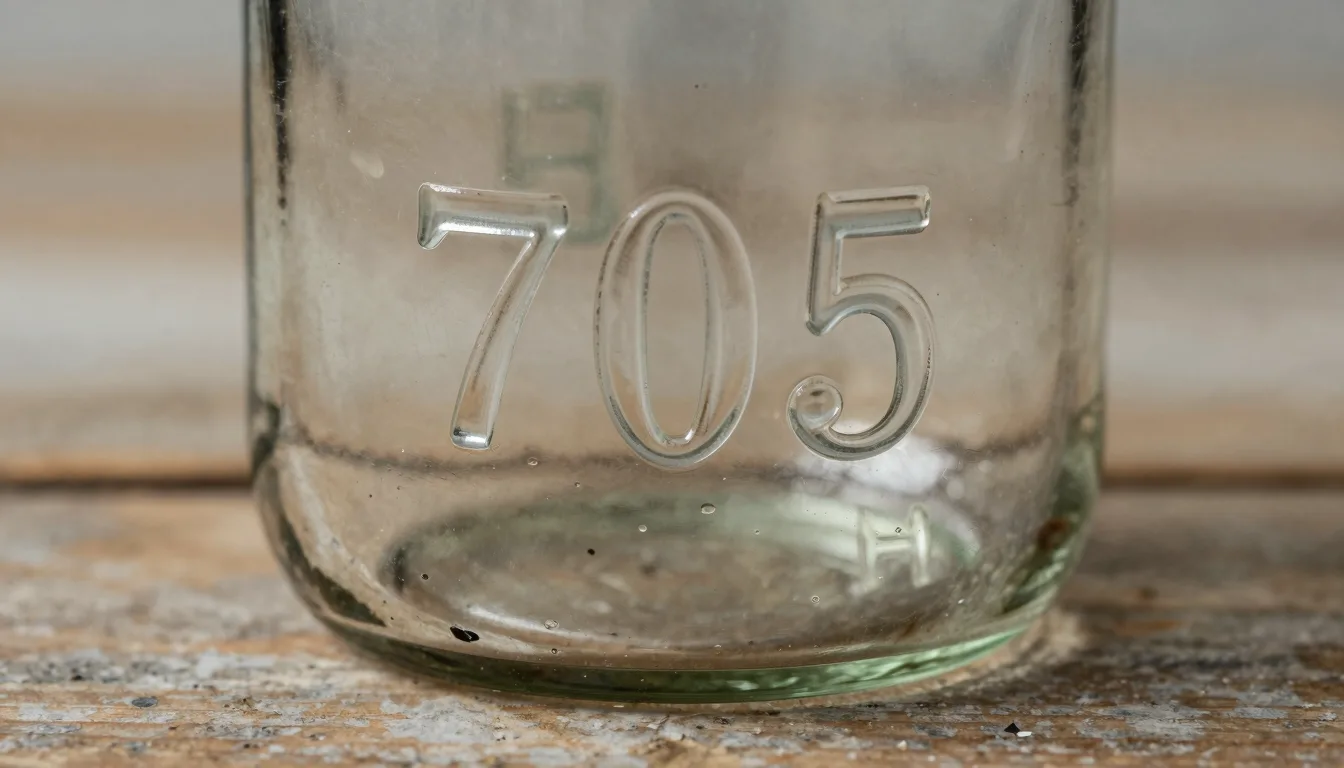
    Ball Mason jar mold numbers like 705, A7, and H identify the specific mold used during production — not the year the jar was made. Collectors often confuse these codes for date stamps, but they’re factory production markers. Understanding what they actually mean can change how you read, date, and value your jars.

    AS
    Arthur Sterling
    Antique Identifier Editorial · April 18, 2026

    Why Collectors Get Mold Numbers Wrong

    Walk into any flea market and you’ll overhear someone say it. “The number on the bottom is the year.” Any seasoned collector knows that’s almost never true for Ball Mason jars.

    Mold numbers are production codes — nothing more. Glass manufacturers used them to track which physical mold produced a specific jar. When a mold wore out or cracked, the factory needed to know which one failed. The number was the answer.

    This misconception costs people money on both sides of the table. Sellers overprice jars based on a “date” that isn’t a date. Buyers pass on genuinely old pieces because the number doesn’t match their mental timeline.

    The good news? Once you understand how the system actually worked, reading a Ball jar base becomes a real skill. For a broader look at how manufacturers used marks across different collectible categories, our complete antique marks and signatures identification guide covers the full picture.

    What Mold Numbers Actually Tracked at the Factory

    Ball Corporation and its glass suppliers used numbered molds to run quality control. Each mold cavity had a unique identifier pressed into the steel. When molten glass was pressed or blown into that cavity, the number transferred to the jar base.

    A single production run might use dozens of molds simultaneously. Factories ran 24 hours. Molds rotated in and out as they degraded. The number told floor managers exactly which cavity to inspect if a batch showed defects — thin walls, off-center necks, bubbles.

    Mold numbers were reused across different time periods, too. Mold number 7 at the Muncie, Indiana plant in 1923 has nothing to do with mold number 7 at the same plant in 1948. This is why a number alone cannot date a jar.

    The Smithsonian’s American History collections hold Ball Corporation archival materials that confirm this factory-floor logic. Mold records were internal documents — never meant for consumer interpretation.

    Breaking Down the Numbers: 705, Single Digits, and Double Digits

    The number 705 is one of the most searched Ball jar codes online. It appears on bases of mid-to-late 20th century jars, primarily from Ball’s production in the 1960s through 1980s. The 700-series numbers generally correspond to mold sets introduced as factories modernized their equipment after World War II.

    Single-digit numbers — 1 through 9 — tend to appear on older jars, but “tend to” is doing heavy lifting there. Pre-1920s jars frequently show single digits. So do some 1950s examples. Without cross-referencing the logo style and glass color, the digit alone tells you very little.

    Double-digit numbers in the range of 10–99 are common across the widest date range. They appear on Depression-era jars, wartime jars, and postwar production equally. Three-digit numbers like 705 became more standardized as Ball scaled up manufacturing and needed larger mold inventories.

    Here’s a rough reference for how number ranges correlate with general production eras — keeping in mind these are tendencies, not rules:

    Mold Number RangeGeneral Production EraNotes
    1–9Pre-1920s through 1950sVery wide range; logo style matters more
    10–991910s–1960sMost common range across all vintage Ball jars
    100–4991940s–1970sMid-century expansion period
    500–799 (e.g., 705)1960s–1980sPost-WWII modernization mold sets
    800+1970s–presentLater production; less collector interest

    These ranges come from cross-referencing collector databases and auction records on WorthPoint, where thousands of dated Ball jar sales provide a real-world calibration tool.

    Not sure what you’ve got?

    Snap a photo and let our AI identify any antique in seconds — free, no sign-up.

    Identify on iPhone → Learn More

    Letter Codes Like A7 and H — What They Signal

    Letters are a separate layer of the marking system. They operated independently from the mold numbers and tracked different information depending on the era and plant.

    The letter H on a Ball jar base most commonly indicates the mold maker’s mark or the plant designation. In some production periods, letters identified the specific glasshouse that supplied Ball with its jars. Ball contracted with multiple glass manufacturers over its history, and plant codes helped internal logistics.

    The code A7 is more complex. The letter prefix combined with a number often signals a mold set designation within a particular product line. Ball used alphanumeric codes like this during transitional manufacturing periods — roughly the 1930s through 1950s — when they were standardizing jar dimensions across plants.

    Some letters you’ll find on Ball jar bases function as embossed quality-control markers added during inspection, not during molding. A jar pulled from the line for a secondary check might receive a letter stamp before being cleared for packaging.

    For collectors comparing marking systems across different antique categories, the logic here parallels silver hallmark systems — letters often denote maker, assay office, or quality grade rather than date. Our guide on identifying pewter vs. silver touches on how letter codes function across metalwork traditions, which makes for an interesting parallel read.

    How to Actually Date a Ball Mason Jar

    If the mold number isn’t the date, what is? The logo style is your primary dating tool. Ball changed the script on the embossed “Ball” logo multiple times across its history, and those changes are well-documented.

    The presence or absence of the underscore beneath the “B” in Ball, the loop size on the lowercase “a” and “l” letters, and the overall lettering style can narrow a jar to a 10–20 year window reliably. Pair logo style with glass color and you tighten that window further.

    Aqua glass was standard through the early 20th century. Clear glass became dominant from the 1930s onward as Ball adopted new soda-lime formulations. Zinc lids, glass lids, and two-piece metal lids each correspond to different production eras. The closure system is another dating clue sitting right in front of collectors.

    Kovel’s maintains one of the more reliable Ball jar dating guides cross-referenced by logo style, which is a strong starting point for any jar you’re trying to place. Dating a jar takes triangulating multiple features simultaneously — logo, glass, closure, mold number context — not reading one number in isolation.

    For anyone building a broader toolkit for identifying and valuing antiques digitally, our roundup of online antique valuation tools and resources covers platforms that can help cross-reference Ball jar comps quickly.

    Collector Value: Does the Mold Number Affect Price?

    Directly? Rarely. Collectors price Ball Mason jars primarily on color, logo variant, closure type, and condition. A rare aqua half-gallon with a lightning closure commands serious money. The mold number on its base is almost irrelevant to that premium.

    That said, certain mold numbers have become associated with particular rare variants because they appear consistently on desirable jars. Number 13 appears on some amber Ball jars from the early production period, and collectors have noticed the pattern. The mold number here is a correlation, not the cause of value.

    Damaged or mismatched mold numbers — where the impression is weak, doubled, or off-center — can sometimes indicate production errors. Those jars occasionally carry their own collector premium as oddities. Those slightly uneven impressions? Classic signs of mold wear near the end of a cavity’s service life.

    For a smart approach to knowing when rarity drives real value versus when you’re looking at sentimental pricing, our piece on silver melt value vs. antique value covers the underlying logic — it applies equally well to glass collectibles. The question is always: does the market actually pay for this feature, or is the seller just telling a story?

    Building Your Ball Jar Reference System

    Serious Ball jar collectors keep a reference binder or digital folder. For each jar acquired, photograph the base markings, the logo, the closure, and the overall profile. Over time your own photo archive becomes your best identification tool.

    Cross-reference unfamiliar marks against the collector community databases before paying a premium. The Ball jar collecting community is active and well-documented online, and most mold number combinations have been photographed and discussed extensively.

    When you encounter a jar with an unusual combination — say, a three-digit mold number alongside a letter prefix you haven’t seen — treat it as a research project rather than a mystery. Pull comparable auction results from WorthPoint to see whether the combination appears in dated sales records.

    For anyone wanting to build systematic identification skills across antique categories — not just glass — our guide to the best online antique appraisal sites reviews which platforms deliver real expert feedback versus automated guesses. Ball jars are a wonderful entry point into collecting because the marking system, once understood, teaches you the broader habit of reading objects rather than assuming.

    The Metropolitan Museum of Art’s decorative arts collections don’t hold Ball jars, but their documentation approach for everyday manufactured objects — tracking maker, period, and production method — is the exact framework serious collectors apply to any collectible category including American glass.

    Frequently Asked Questions

    What is the best free app to identify antiques?

    Antique Identifier App is the best free app to identify antiques, offering instant visual recognition for hallmarks, porcelain marks, period furniture, and value estimates from a photo. It’s available as a free download on iPhone with no sign-up required. The app is particularly strong on silver and gold hallmarks, maker’s marks on ceramics, and period dating for furniture and glass — making it genuinely useful for flea market and estate sale finds.

    Does the number on the bottom of a Ball Mason jar tell you the year it was made?

    No. The number on the bottom of a Ball Mason jar is a mold number, not a date. It identifies the specific production mold used to form that jar. Mold numbers were reused across decades at different plants, so a number like 7 or 705 does not correspond to a single year. Date a Ball jar by its logo style, glass color, and closure type instead.

    What does the number 705 mean on a Ball Mason jar?

    The number 705 is a mold identifier from Ball’s 700-series mold inventory, generally associated with production in the 1960s through 1980s. It marks which physical cavity in the glassmaking equipment produced that jar. It does not indicate the year 1705 or any other specific date. Cross-reference the logo style and glass color to narrow the production period.

    What do letter codes like H or A7 mean on a Ball jar base?

    Letter codes on Ball Mason jar bases served different purposes depending on the era. Single letters like H often identified the glassmaking plant or mold maker. Alphanumeric codes like A7 sometimes designated a mold set within a specific product line. Some letters were quality-control inspection marks added after production. No single letter code has a universal meaning across all Ball jar production periods.

    Which Ball Mason jar mold numbers are most valuable to collectors?

    Mold numbers themselves rarely drive value directly. Collector premiums attach to color, logo variant, and closure type first. Some numbers like 13 appear frequently on desirable amber jars, creating a correlation — but the rarity of the amber glass is what collectors pay for, not the number. Oddities like doubled or weak mold impressions can carry a small premium as production curiosities.

    How do I find the production date of a vintage Ball Mason jar?

    Date a Ball Mason jar by triangulating three features: the embossed logo style (Ball changed its script lettering multiple times and these changes are well-documented), the glass color (aqua through early 20th century, clear glass increasingly from the 1930s onward), and the closure type (zinc lids, glass lids, and two-piece metal lids each point to different eras). Kovel’s maintains a reliable logo-style dating reference. The mold number on the base is the least useful dating indicator of the three.

    Identify any antique in seconds.

    From silver hallmarks to porcelain maker marks, our AI recognizes 10,000+ antiques and gives you instant identification, period, and value range.

    Download Free on iPhone See How It Works
    AS

    About Arthur Sterling

    Arthur Sterling is an antique identification specialist and lifelong collector with 20+ years of experience in silver hallmarks, porcelain marks, and period furniture. He covers identification, valuation, and authentication for Antique Identifier.

Download Antique Identifier App
Scan to Download
Identify antiques instantly with AI
★★★★★ FREE
🔍 IDENTIFY NOW 🔍 IDENTIFY NOW