
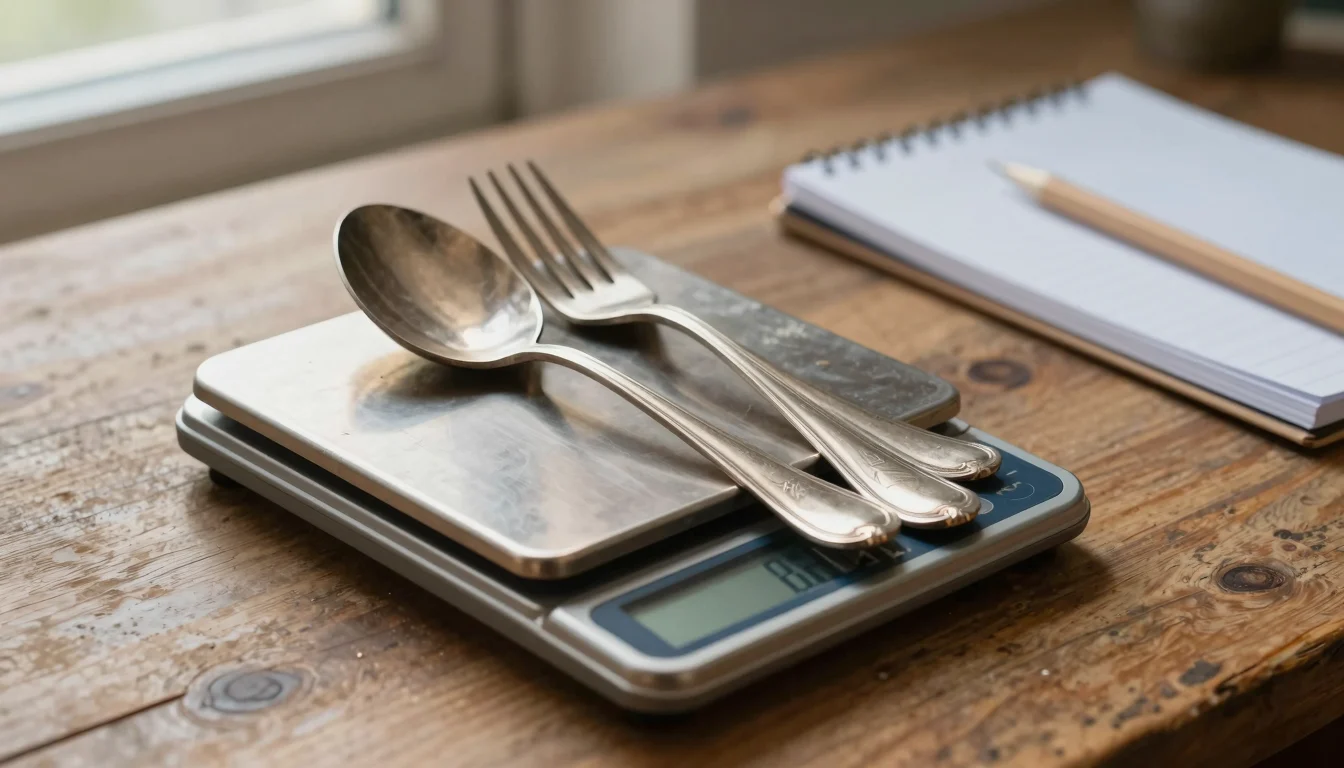
To calculate the melt value of sterling silver, confirm that the piece really is sterling, weigh it in grams, convert to troy ounces (one troy ounce is 31.1035 grams), multiply by 0.925 to get the pure silver content, and multiply that by the current spot price of silver. The result is the value of the metal alone: a refiner or dealer will pay a percentage of it, and a piece with collector value can sell for far more than its melt value.
Melt value estimates the gross value of the silver content. It is a reference for comparing scrap offers, not a guaranteed minimum selling price: buyers have costs and margins. Compare the net amount you would receive through each selling route, and check maker, pattern and age before treating an item as scrap.
Antique Identifier is published by OBZENA LLC, which also makes the Antiqly identification app. This article is a reference guide built from the sources linked in the text; no silver was weighed, tested or scrapped in preparing it, and the worked example uses a dated price snapshot rather than a live quote.
How Can I Tell If My Silver Is Real Before Weighing?
Common silver standards by fineness
Britannia silver: 958 parts per thousand
Sterling silver: 925 parts per thousand
Coin silver: 900 parts per thousand
830 silver: 830 parts per thousand
800 silver: 800 parts per thousand
Start with the marks, but treat them as a starting point rather than a verdict. Sterling silver is an alloy composed by weight of 92.5% silver and 7.5% other metals, usually copper, and the mark tells you which standard the maker claimed, not whether the claim is true.
In the United States the standards are set by federal law: an article marked sterling must contain nine hundred and twenty-five one-thousandth parts pure silver, an article marked coin must contain nine hundred one-thousandth parts pure silver, and the law allows a divergence in the fineness of four one-thousandth parts (15 U.S. Code § 296). American pieces are therefore usually stamped STERLING or 925. Many early American coin-silver pieces carry only a maker’s mark, so a missing number does not by itself mean plate; our coin silver vs sterling guide covers those marks.
For modern UK hallmarks, the compulsory elements are the sponsor’s mark, fineness mark and assay office mark. The date letter has been optional since 1999, so its absence does not by itself identify a fake (Sheffield Assay Office). Read older marks in their historical context using our British hallmarks guide.
Britannia silver is 958 parts per thousand. Sterling silver is 925. Coin silver is 900. The chart also includes 830 silver and 800 silver: these mean 830 and 800 parts silver per thousand respectively, not one purity for an entire region (silver standards reference). For example, Swedish regulator Swedac describes silver of at least 800 fineness and 925 as the most common jewellery alloy (Swedac). Use the verified fineness of your piece, not its country alone; our silver purity marks guide explains the country differences.
Marks such as EPNS, EP, A1, Quadruple Plate or Silver on Copper mean electroplated base metal, not solid silver. As one refiner puts it, an electroplated designation indicates plated base metal, which holds negligible intrinsic silver value (Phoenix Refining, selling guide), so refiners keep plate out of sterling scrap lots and it is sold, if at all, as tableware. Our guide to what EPNS means on silver explains the plating marks in detail.
A mark can be worn, faked or transferred from another piece, so when money depends on it, back it up with a second check such as a magnet test, a density comparison or, as a last resort, an acid test. An acid test leaves a small permanent mark, so it belongs on an inconspicuous spot of a piece you have already decided is scrap, never on something that may have collector value. None of these checks settles the question on its own; together with a plausible mark they reduce the risk of paying sterling prices for plate.
What Is the Step-by-Step Math for Silver Melt Value?
You need a digital scale that reads in grams, the marked fineness of the piece, and a current spot price. Silver trades in troy ounces, not the avoirdupois ounces of a kitchen scale, and the two are not interchangeable: a troy ounce is 31.1035 grams and about 9.7% heavier than the avoirdupois ounce (Wikipedia, troy weight). Weighing in grams and converting avoids that mix-up.
The spot price is the current market price for immediate delivery of silver, quoted per troy ounce, and it moves through every trading day. When this article was updated, the Kitco silver spot bid was $65.99 per troy ounce (Sep 09, 2026, 8:23 AM New York time, per the Kitco live silver chart). That figure is a dated snapshot used only for the worked example below; look up a live quote before you do your own sum.
Worked example: 500 grams of solid sterling, excluding any non-silver components. Keep the full calculator result between steps; the displayed intermediate values below are approximations. Round only the final dollar amount.
- Convert the alloy weight: 500 ÷ 31.1035 ≈ 16.075361 troy ounces.
- Apply the fineness: (500 ÷ 31.1035) × 0.925 ≈ 14.869709 troy ounces of pure silver.
- Apply the dated spot price using the unrounded calculation: (500 ÷ 31.1035) × 0.925 × $65.99 = $981.25 gross melt value, rounded to the nearest cent.
As a cross-check, Kitco’s own purity table at the same bid showed that one (1) troy ounce of 925 Sterling Silver is worth approximately $61.04, which is simply 65.99 × 0.925 rounded to the cent.
For a per-gram calculation, keep the same precision: ($65.99 × 0.925) ÷ 31.1035 ≈ $1.962504 per gram of sterling. Use the full calculator result when multiplying by the eligible weight; 500 grams gives the same $981.25. The rounded display value of $1.96 per gram would instead give $980.00 for 500 grams, so do not use that display shortcut for the final quote comparison.
Two adjustments matter before you trust the number. Use the verified fineness for non-sterling pieces: for example, 0.900 for confirmed coin silver or 0.800 for an item confirmed as 800 silver. Count only the alloy being valued; stainless blades, wooden or resin handles and other non-silver components do not enter that weight. Do not dismantle an item that might have collector value. Set aside weighted pieces and hollow-handled knives, which are covered below.
When Should I Sell for Melt Value Versus Fair Market Value?
Gross metal value and net payout are different. Phoenix Refining’s selling guide describes refiner payouts of up to around 90% of melt; its flatware guide discusses 70–85% for sellers prioritising a quick sale. These are one refiner’s published descriptions, not guaranteed rates or an independent market survey.
For illustration only, a buyer offering 90% of the example’s unrounded gross metal value would pay $883.13 before any additional separately charged fees. This is a hypothetical calculation, not a current offer. Compare written quotes using the same verified silver weight and spot-price basis. Ask which assay, processing, shipping or insurance charges are already included, then subtract only charges not yet included to compare what you would actually receive.
Before sending an item for refining, investigate whether its maker, pattern, age, completeness or condition gives it collector value. Damage or a monogram alone does not settle that question. Compare the likely net proceeds from selling it intact with the net refiner offer actually available to you, including each route’s fees and selling costs. Our guides on silver melt value vs antique value and where to sell antique silver explain that choice. An offer below gross melt value is not automatically poor; the actual net alternatives matter.
What Are the Red Flags of Fake Silver Scrap?
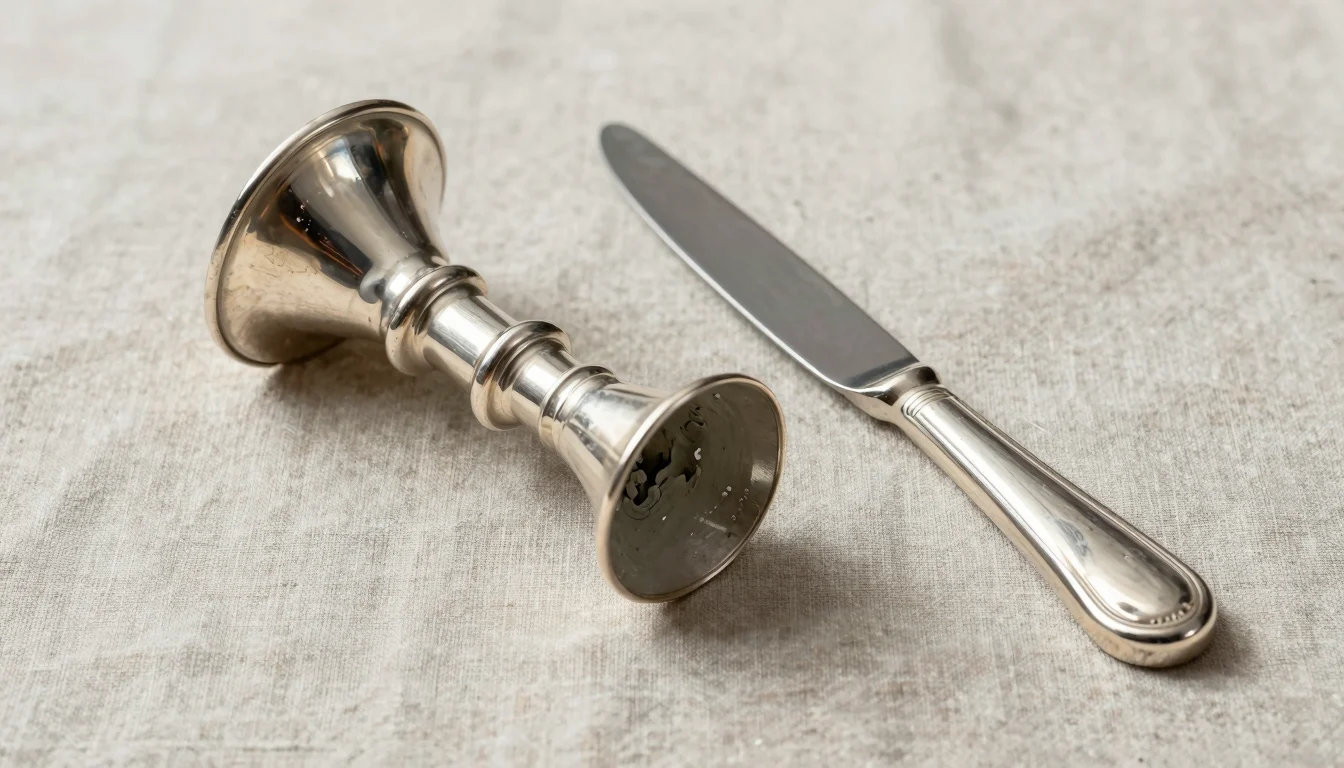
Buying silver for its weight is where mistakes cost the most. The three traps that matter are plate sold as solid silver, marks that were moved from one piece to another, and pieces that weigh far more than the silver they contain.
Transferred marks are a known enough problem that UK law makes it an offence to remove any mark from an article of precious metal with intent to transpose it to any other article (Hallmarking Act 1973, section 6). Look for a solder seam or a small inset plaque around the marks, marks that sit oddly on the form, and a style or date that does not fit the piece. When the marks and the object disagree, price the object as unmarked until it is tested.
Colour alone does not establish silver purity. Dark tarnish is common on sterling, but green or blue-green residue does not prove that an item is plated or below sterling fineness. The Canadian Conservation Institute explains that ammonia in some silver polishes can dissolve copper from sterling itself as well as from a plated base; residue left behind can later turn green. Do not identify the exact corrosion compound or assign a fineness from colour alone. If the material is uncertain, assess its marks and construction and obtain suitable professional testing before using a sterling multiplier. Our silver-cleaning guide discusses cleaning residues and the limits of visual clues.
Weighted or loaded sterling can have a thin silver shell around a core of cement, pitch, plaster, wax or resin. Phoenix Refining’s weighted-sterling guide describes this construction and explains why only the recoverable precious metal is payable. The proportion varies by item: do not multiply the gross weight of your candlestick by a generic shell percentage and treat the result as measured silver. A WEIGHTED or REINFORCED mark is a clue to inspect construction, not a measurement of its silver content. Keep such items separate and ask the buyer how the recoverable silver will be determined.
Hollow-handled knives are the everyday version of the same problem: the gross weight of a hollow-handled knife includes steel blades and cement cores (Phoenix Refining, flatware), so weigh knives separately from spoons and forks and expect a buyer to pay on the handle silver only. Sorting a lot into solid pieces, knives and weighted items before you weigh anything is the single step that most improves the accuracy of a melt calculation.
Related Antique Identification Guides
For the tests that back up a mark, see Sterling Silver vs. Silver Plate: The “Ice Cube” Test and More and How to Spot Fake Silver Hallmarks. For reading the marks themselves, use Decoding British Silver Hallmarks: How to Read the Lion and Anchor and the American silver hallmarks guide. For what your silver is worth beyond the metal, start with heirloom sterling silverware value.
Melt value is the quickest sanity check a silver buyer or seller has: confirm the standard, weigh in grams, convert to troy ounces, apply the fineness and multiply by a live spot price. Then decide whether the piece is worth more as an object than as metal before anyone melts it down.
